( Saccharum officinarum L .)

Sugarcane (Saccharum officinarum L.) Abhinav Mishra 8th Semester Course Instructor : Dr. Anil Kant Thakur Industrial Crops and Products | 15B1WBT841
Facts
Facts • Main source of sugar in India. • Prominent position as a cash crop. • Brazil Ranks first in Sugar Production (2015). Industrial Crops and Products | 15B1WBT841
Origin
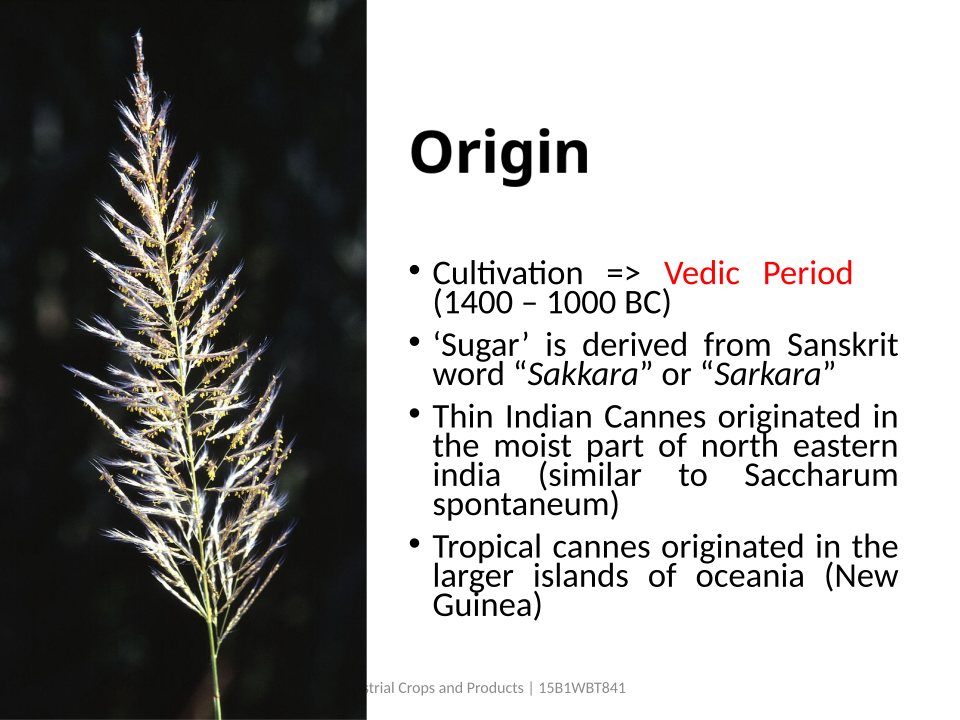
Origin • Cultivation => Vedic Period (1400 – 1000 BC) • ‘Sugar’ is derived from Sanskrit word “Sakkara” or “Sarkara” • Thin Indian Cannes originated in the moist part of north eastern india (similar to Saccharum spontaneum) • Tropical cannes originated in the larger islands of oceania (New Guinea) Industrial Crops and Products | 15B1WBT841
Area and Distribution
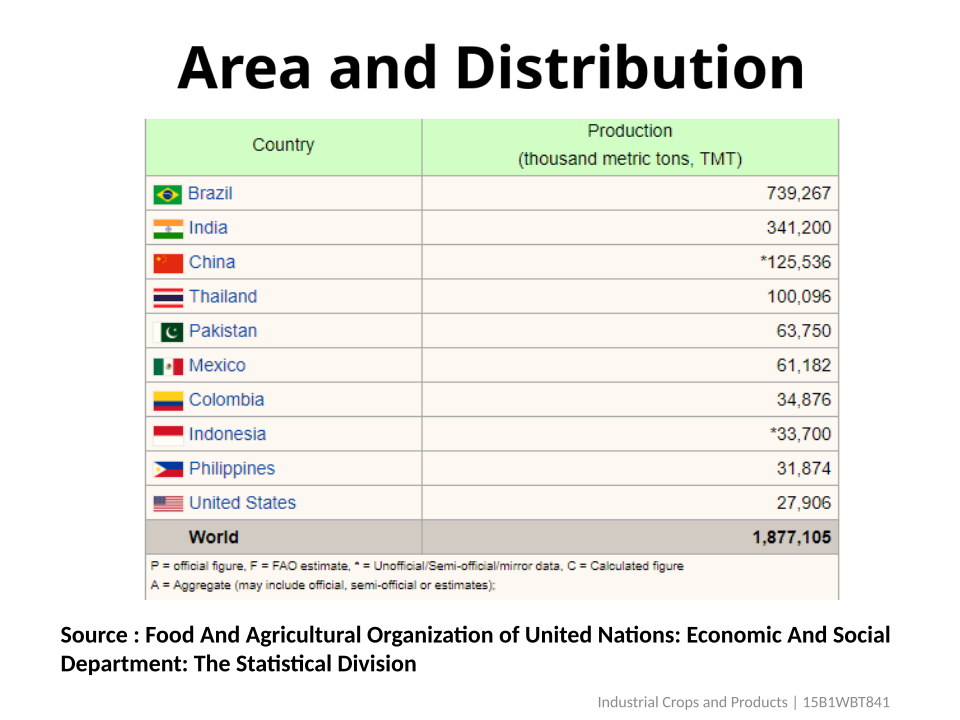
Area and Distribution Source : Food And Agricultural Organization of United Nations: Economic And Social Department: The Statistical Division Industrial Crops and Products | 15B1WBT841
Source: Directorate of Economics and Statistics, Ministry of Agriculture
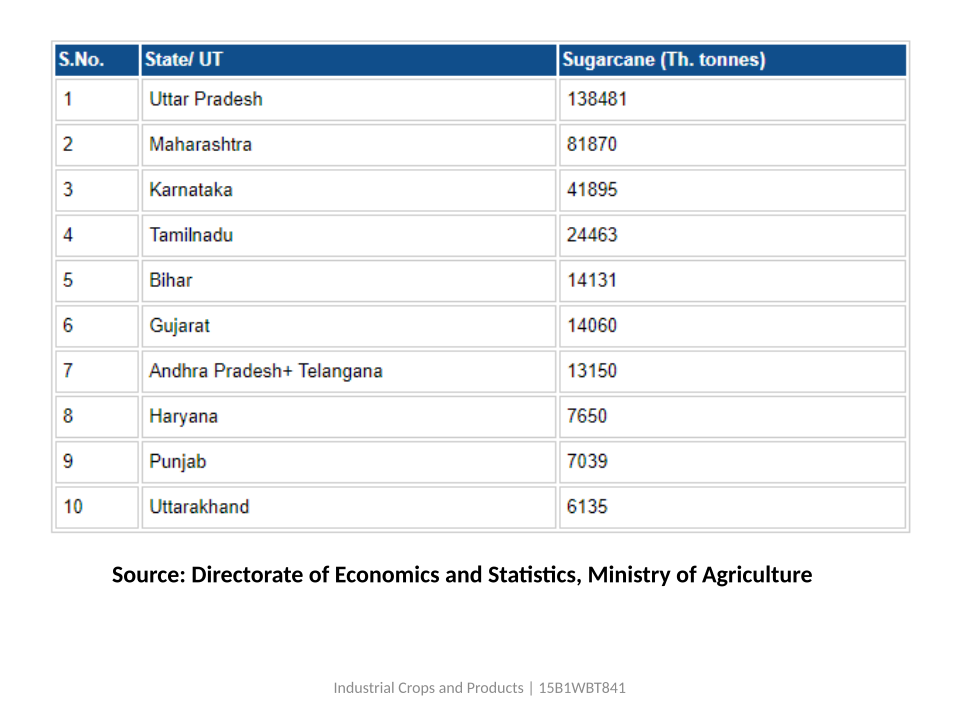
Source: Directorate of Economics and Statistics, Ministry of Agriculture Industrial Crops and Products | 15B1WBT841
• In India, Pricing Policy And Climatic Conditions play • Uttar Pradesh has the largest acreage : 48% of the area for
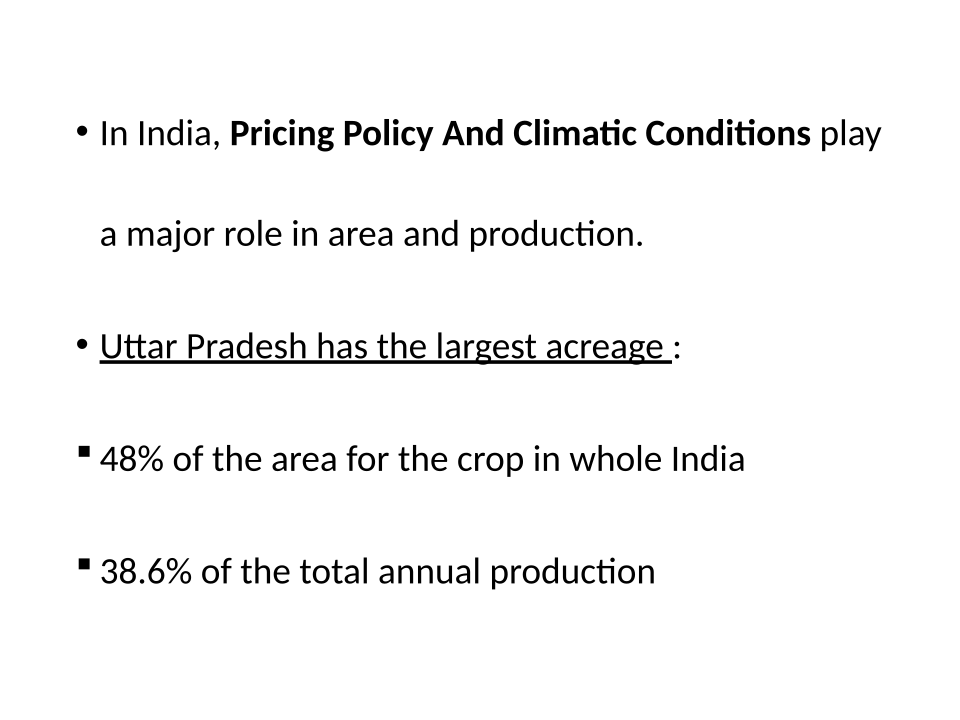
• In India, Pricing Policy And Climatic Conditions play a major role in area and production. • Uttar Pradesh has the largest acreage : 48% of the area for the crop in whole India 38.6% of the total annual production Industrial Crops and Products | 15B1WBT841
Classificati on
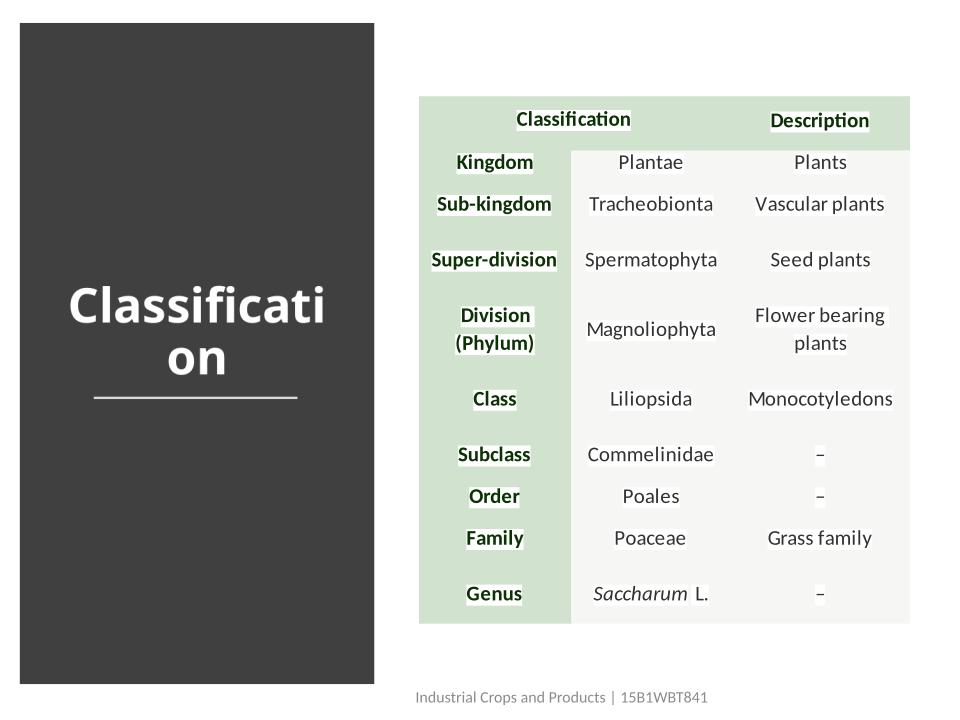
Classification Classificati on Description Kingdom Plantae Plants Sub-kingdom Tracheobionta Vascular plants Super-division Spermatophyta Seed plants Division (Phylum) Magnoliophyta Flower bearing plants Class Liliopsida Monocotyledons Subclass Commelinidae Order Poales Family Poaceae Grass family Genus Saccharum L. Industrial Crops and Products | 15B1WBT841
Species Other names Native Description
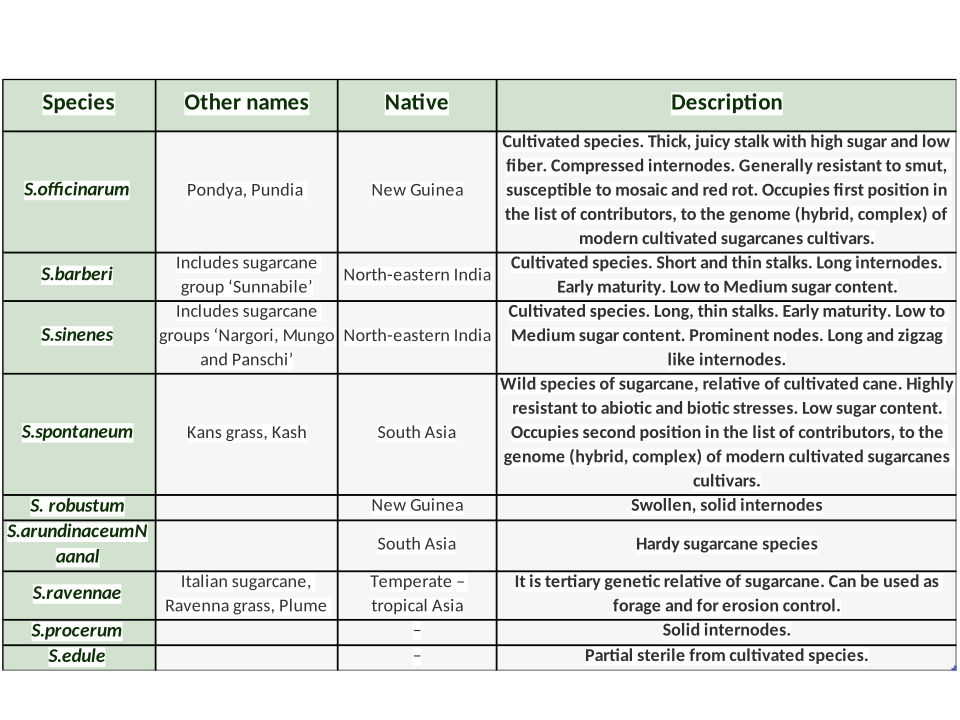
Species S.officinarum S.barberi S.sinenes S.spontaneum S. robustum S.arundinaceumN aanal S.ravennae S.procerum S.edule Other names Native Description Cultivated species. Thick, juicy stalk with high sugar and low fiber. Compressed internodes. Generally resistant to smut, Pondya, Pundia New Guinea susceptible to mosaic and red rot. Occupies first position in the list of contributors, to the genome (hybrid, complex) of modern cultivated sugarcanes cultivars. Includes sugarcane Cultivated species. Short and thin stalks. Long internodes. North-eastern India group ‘Sunnabile’ Early maturity. Low to Medium sugar content. Includes sugarcane Cultivated species. Long, thin stalks. Early maturity. Low to groups ‘Nargori, Mungo North-eastern India Medium sugar content. Prominent nodes. Long and zigzag and Panschi’ like internodes. Wild species of sugarcane, relative of cultivated cane. Highly resistant to abiotic and biotic stresses. Low sugar content. Kans grass, Kash South Asia Occupies second position in the list of contributors, to the genome (hybrid, complex) of modern cultivated sugarcanes cultivars. New Guinea Swollen, solid internodes Italian sugarcane, Ravenna grass, Plume South Asia Hardy sugarcane species Temperate – tropical Asia It is tertiary genetic relative of sugarcane. Can be used as forage and for erosion control. Solid internodes. Partial sterile from cultivated species.
Climatic Requirements
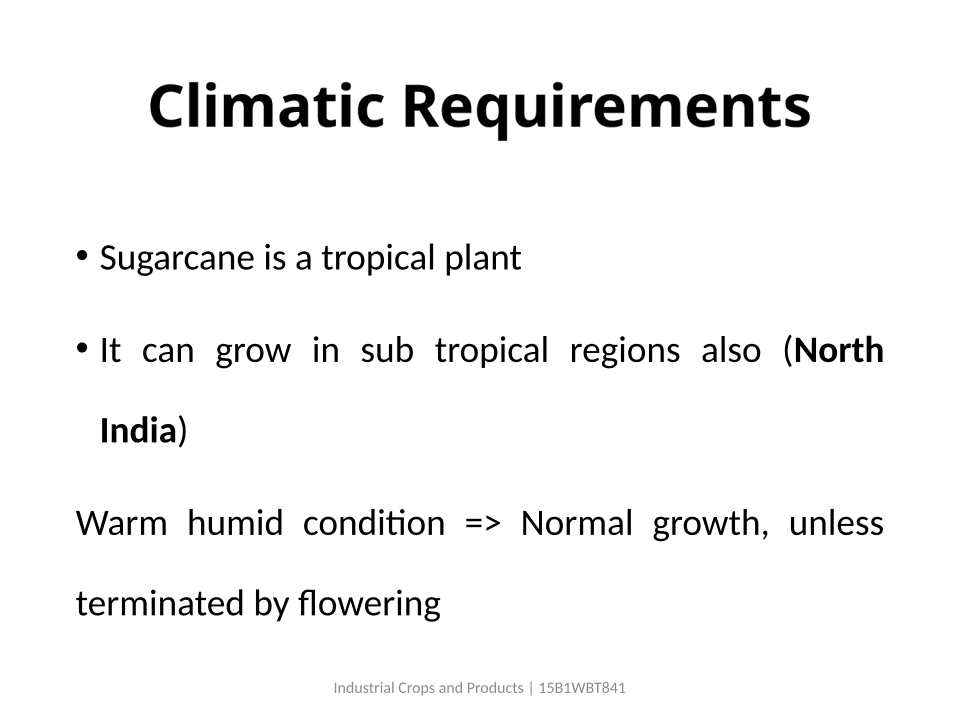
Climatic Requirements • Sugarcane is a tropical plant • It can grow in sub tropical regions also (North India) Warm humid condition => Normal growth, unless terminated by flowering Industrial Crops and Products | 15B1WBT841
> 50ᵒ C => Growth halt < 20ᵒ C => Slow growth* *Low temperatures reduces tillering Optimum Temperature : 26ᵒ C - 32ᵒ C O
> 50ᵒ C => Growth halt < 20ᵒ C => Slow growth* *Low temperatures reduces tillering Optimum Temperature : 26ᵒ C - 32ᵒ C Optimum Rainfall : 75-180 cm/annum Industrial Crops and Products | 15B1WBT841
It requires a long growing season : 10 – 12 months, need certain number of heat units for plant to mature. Ideal parts o
It requires a long growing season : 10 – 12 months, need certain number of heat units for plant to mature. Ideal parts of the country are : • Telangana area of AP • Maharashtra • Parts of Karnataka Industrial Crops and Products | 15B1WBT841
Under bright sunlight : • Stems are thicker but shorter • Leaves are broader and greener Under low sunshine : • Stems ar
Under bright sunlight : • Stems are thicker but shorter • Leaves are broader and greener Under low sunshine : • Stems are slender and long • Leaves are yellowish and narrower Industrial Crops and Products | 15B1WBT841
Soil
Soil It can be grown on all types of soil, ranging from sandy loam to clay loam. It thrives best on well drained loamy soils. Saline, alkaline and acidic, soils are not suitable for this crop Northern India : Loams and clay loams (Alluviums) Southern India : Brown/Reddish loams, laterites and black cotton soil Industrial Crops and Products | 15B1WBT841
Varietie s
Varietie s Industrial Crops and Products | 15B1WBT841
Source: Sugarcane Breeding Institute, Coimbatore (http://www.sugarcane-breeding.tn.nic.in/) &
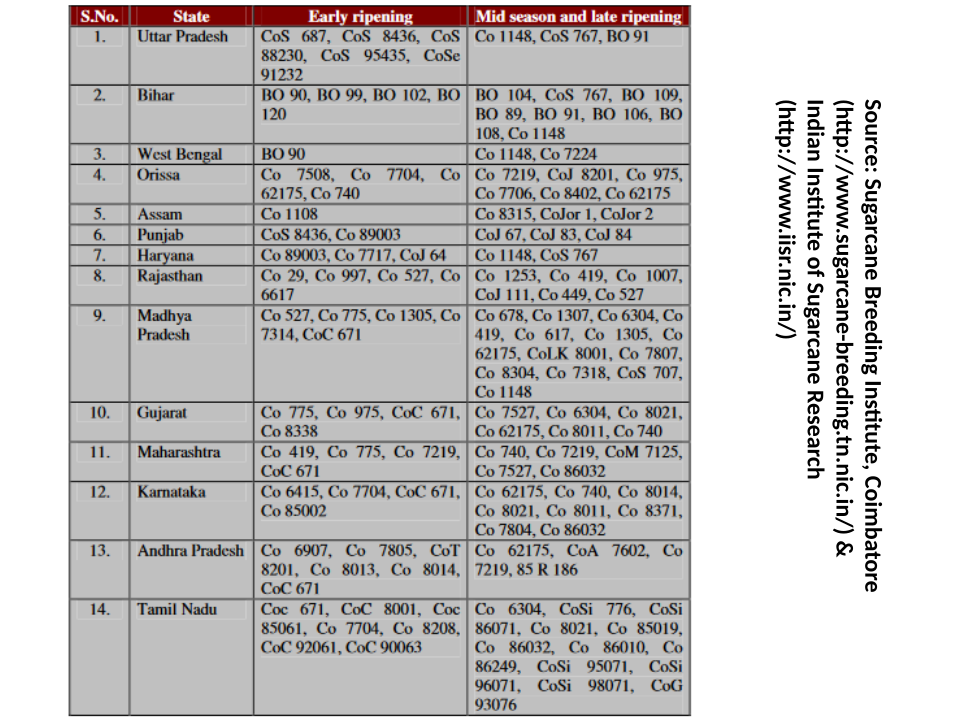
Source: Sugarcane Breeding Institute, Coimbatore (http://www.sugarcane-breeding.tn.nic.in/) & Indian Institute of Sugarcane Research (http://www.iisr.nic.in/) Industrial Crops and Products | 15B1WBT841
Cropping System
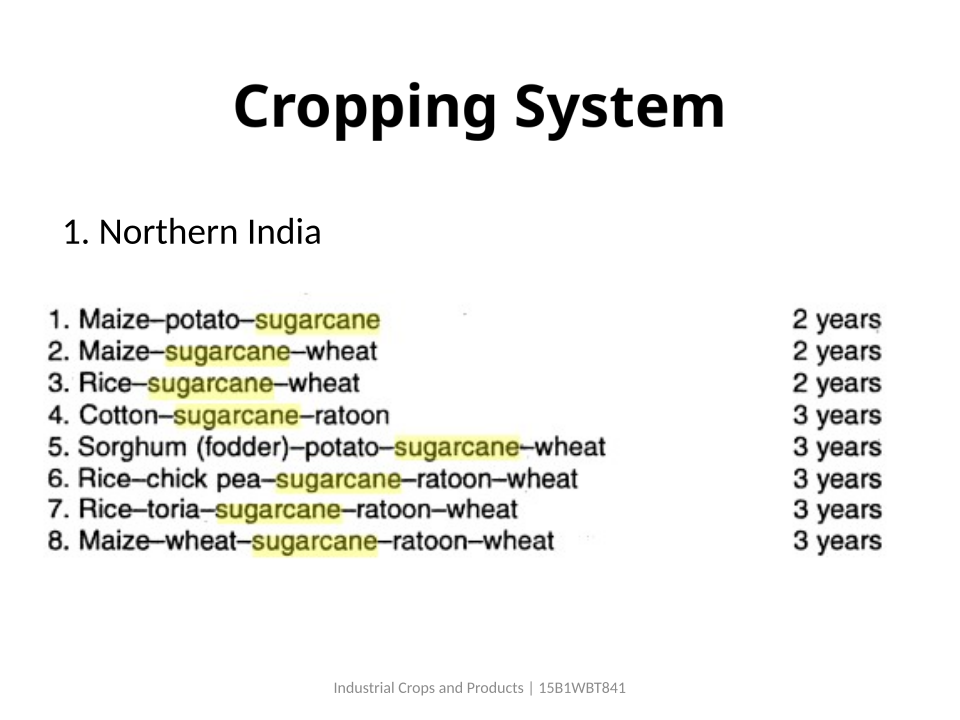
Cropping System 1. Northern India Industrial Crops and Products | 15B1WBT841
2. Southern India
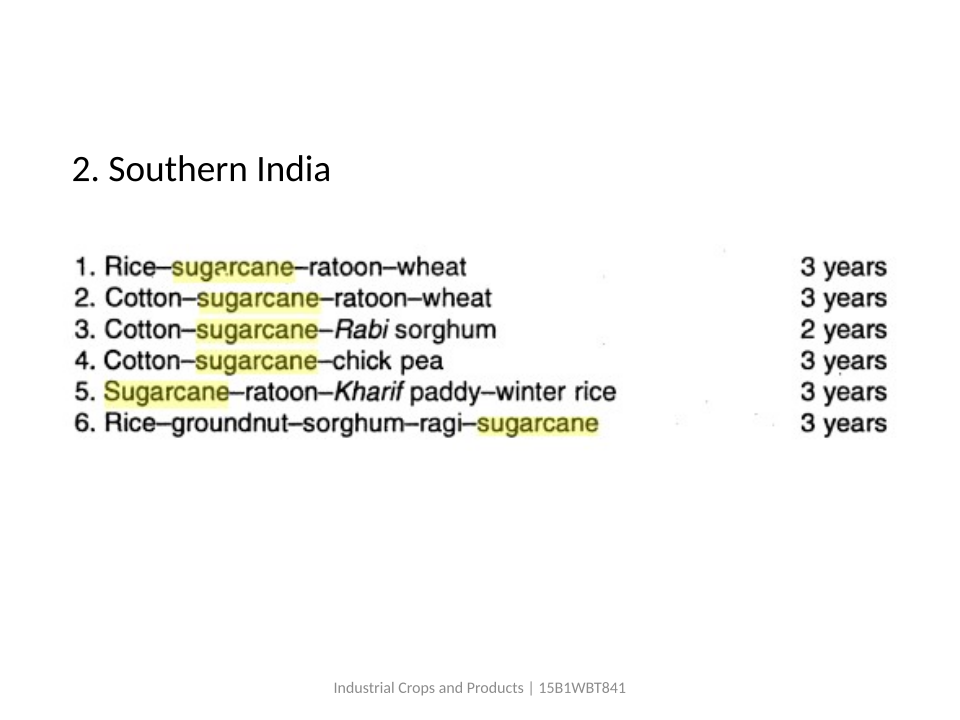
2. Southern India Industrial Crops and Products | 15B1WBT841
Seed and Sowing
Seed and Sowing 1. Seed Selection • Seeds must be free from pests and diseases like red rot, wilt, smut, ratoon stunting etc. • Top one third – half portion of cane has buds of high viability (Best for sowing) • Should be taken from well manured, erect and healthy crop (Age < 10-12 months) • Bottom portion of cane is rich in sugar and takes long time in germination (Jaggery Making) Industrial Crops and Products | 15B1WBT841
• Dry leaves are removed by hands • Cane is cut into three budded sets 30- 45 cm long • 35,000 – 40,000 seeds are needed
2. Seed Preparation and Treatment • Dry leaves are removed by hands (avoiding damage) • Cane is cut into three budded sets 30- 45 cm long • 35,000 – 40,000 seeds are needed to plant one hectare • To prevent the seed setts being attacked by fungal diseases and also to improve germination: 0.5% of Agallol (3%) 0.25% of Aretan (6%) Aretan + Lindane (Northern India) Industrial Crops and Products | 15B1WBT841
3. Time of Planting • 3 times in a year (October, Feb- March and July) • Requires about 25-32ᵒ C for good germination •
3. Time of Planting • 3 times in a year (October, Feb- March and July) • Requires about 25-32ᵒ C for good germination • Delay causes reduction in yield due to low temperature March -> Punjab and Haryana Feb – March -> UP Jan – Feb -> Bihar Dec – Feb -> AP, TN, Maharashtra and Karnataka Industrial Crops and Products | 15B1WBT841
Manures and Fertilizers
Manures and Fertilizers Fertilizer requirement depends upon : Soil • Climate Nitrogen : 120-150 kg/hectare 250-350 kg/hectare Phosphorous : 80 kg/hectare of P2O5 100 kg/hectare of P2O5 Potash : Industrial Crops and Products | 15B1WBT841
Water Management
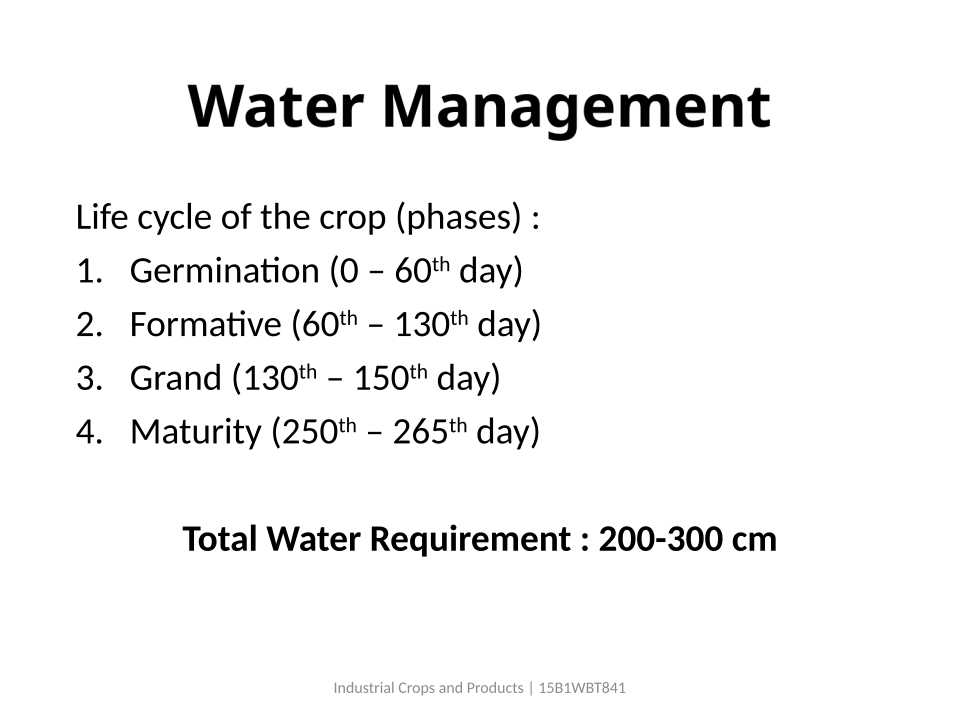
Water Management Life cycle of the crop (phases) : 1. Germination (0 – 60th day) 2. Formative (60th – 130th day) 3. Grand (130th – 150th day) 4. Maturity (250th – 265th day) Total Water Requirement : 200-300 cm Industrial Crops and Products | 15B1WBT841
Northern: Avg. 7 irrigations, 5 before and 2 after monsoon Southern: 8-10 irrigations Note: In each irrigation, 3 acre i
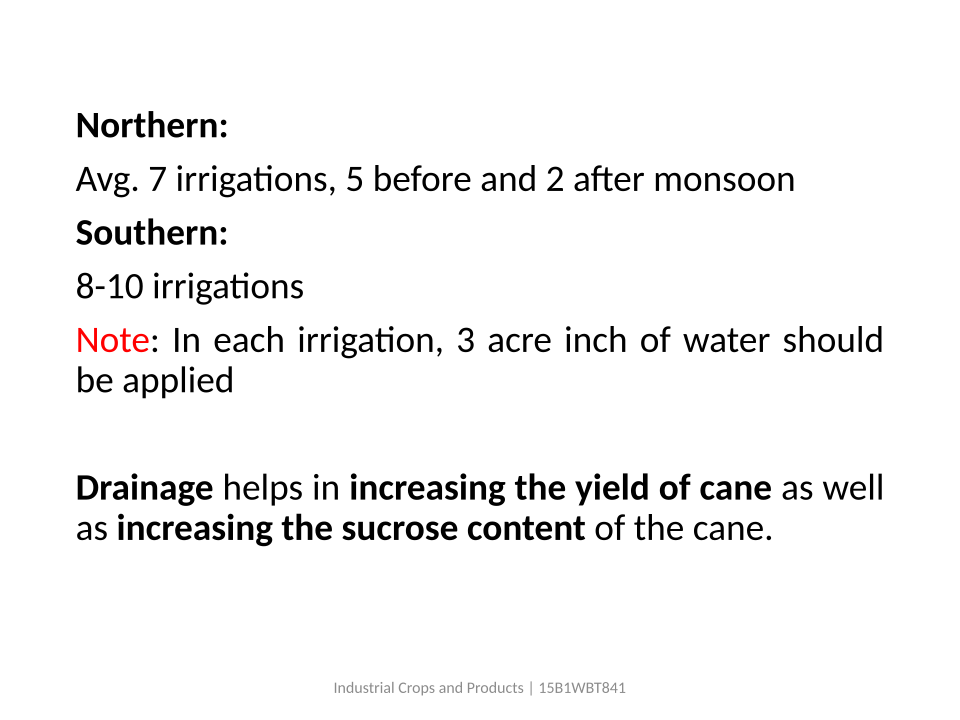
Northern: Avg. 7 irrigations, 5 before and 2 after monsoon Southern: 8-10 irrigations Note: In each irrigation, 3 acre inch of water should be applied Drainage helps in increasing the yield of cane as well as increasing the sucrose content of the cane. Industrial Crops and Products | 15B1WBT841
Weed Control

Weed Control Industrial Crops and Products | 15B1WBT841
Autumn Sugarcane

Autumn Sugarcane Industrial Crops and Products | 15B1WBT841
Chenopodiu m album a.k.a. Bathua
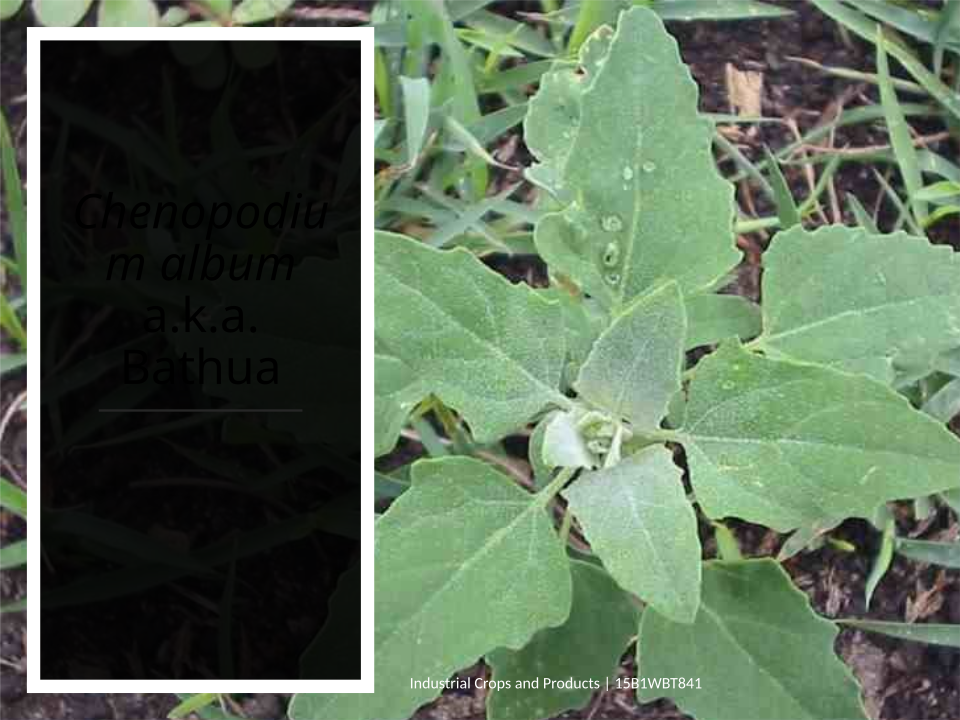
Chenopodiu m album a.k.a. Bathua Industrial Crops and Products | 15B1WBT841
Lathyrus sativa a.k.a. Matri
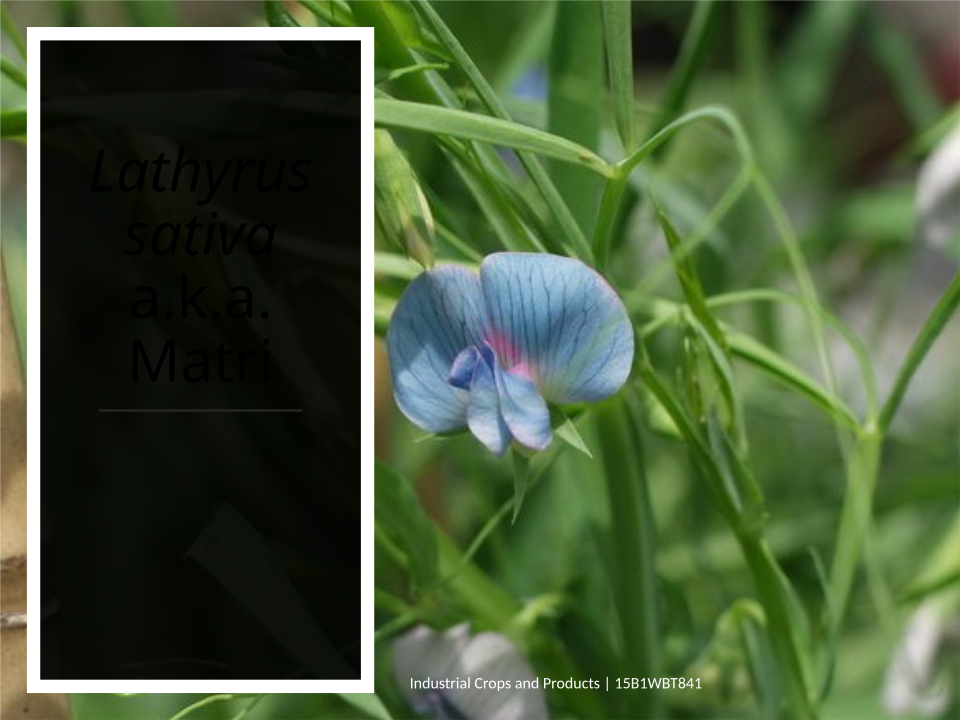
Lathyrus sativa a.k.a. Matri Industrial Crops and Products | 15B1WBT841
Vicia spp. a.k.a. Ankari
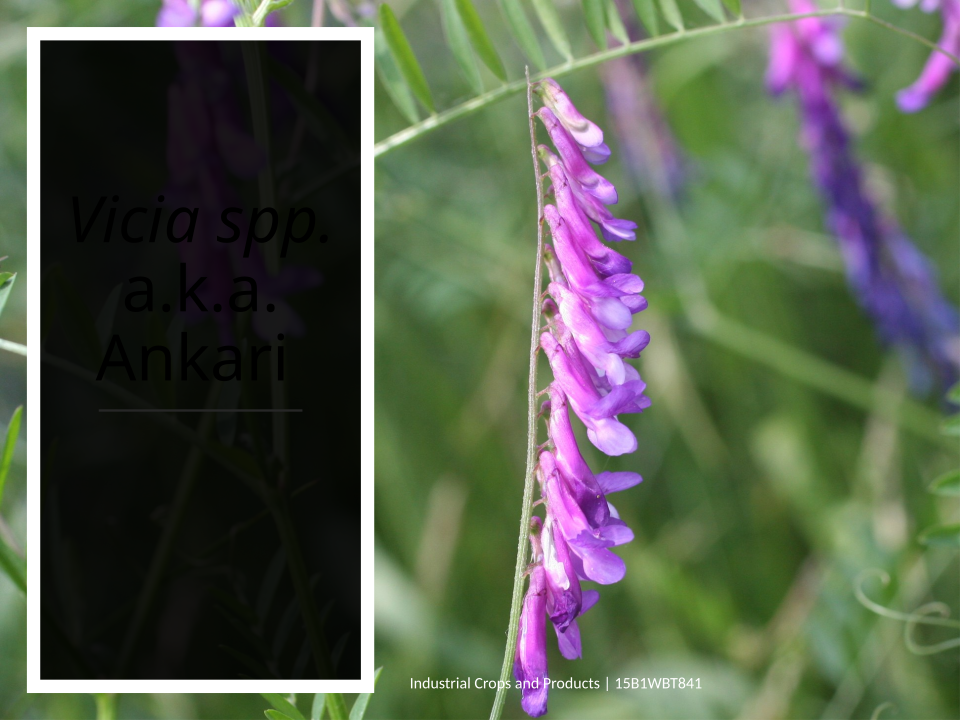
Vicia spp. a.k.a. Ankari Industrial Crops and Products | 15B1WBT841
Angallis arvensis a.k.a. Krishna neel
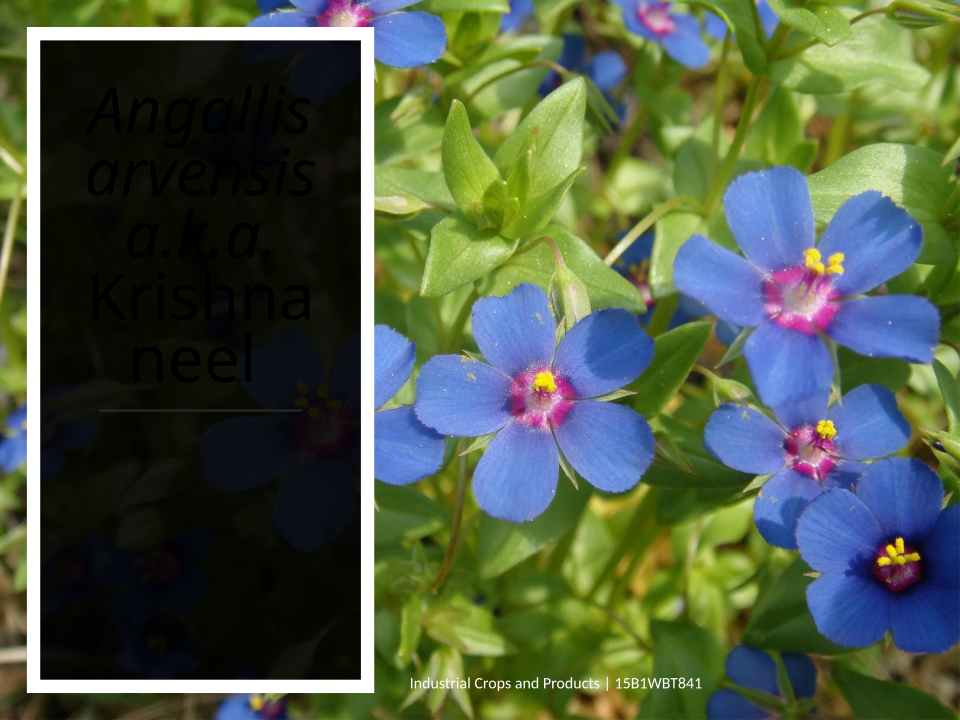
Angallis arvensis a.k.a. Krishna neel Industrial Crops and Products | 15B1WBT841
Fumaria parviflor a a.k.a. Gajri or Soya
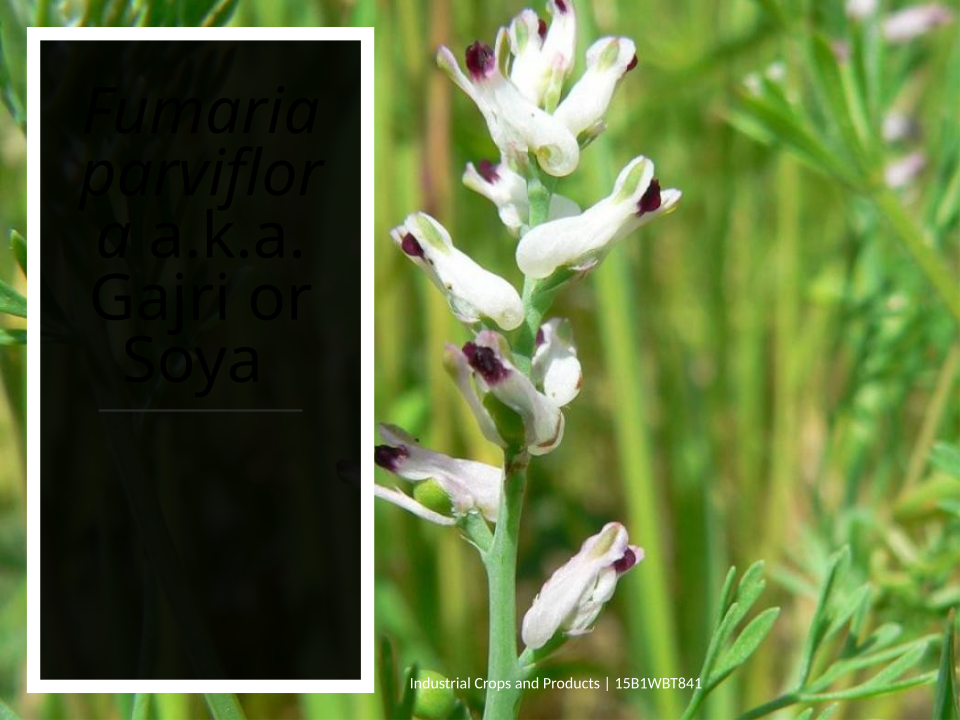
Fumaria parviflor a a.k.a. Gajri or Soya Industrial Crops and Products | 15B1WBT841
Solanum nigrum a.k.a. Makoya
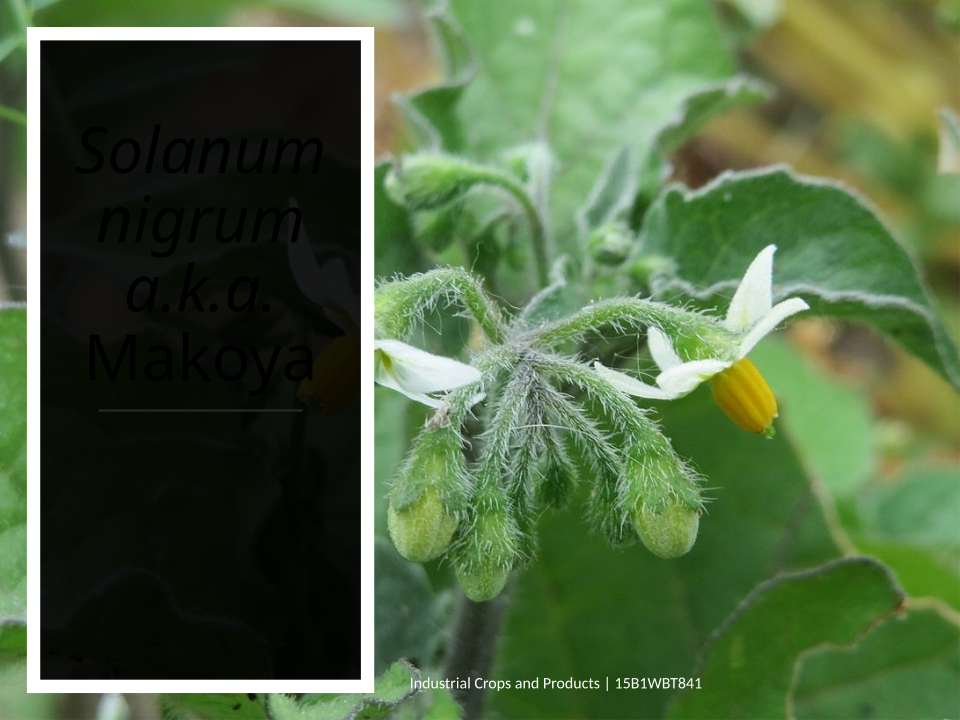
Solanum nigrum a.k.a. Makoya Industrial Crops and Products | 15B1WBT841
Spring Sugarcane

Spring Sugarcane Industrial Crops and Products | 15B1WBT841
Cyperus rutundu s a.k.a. Motha
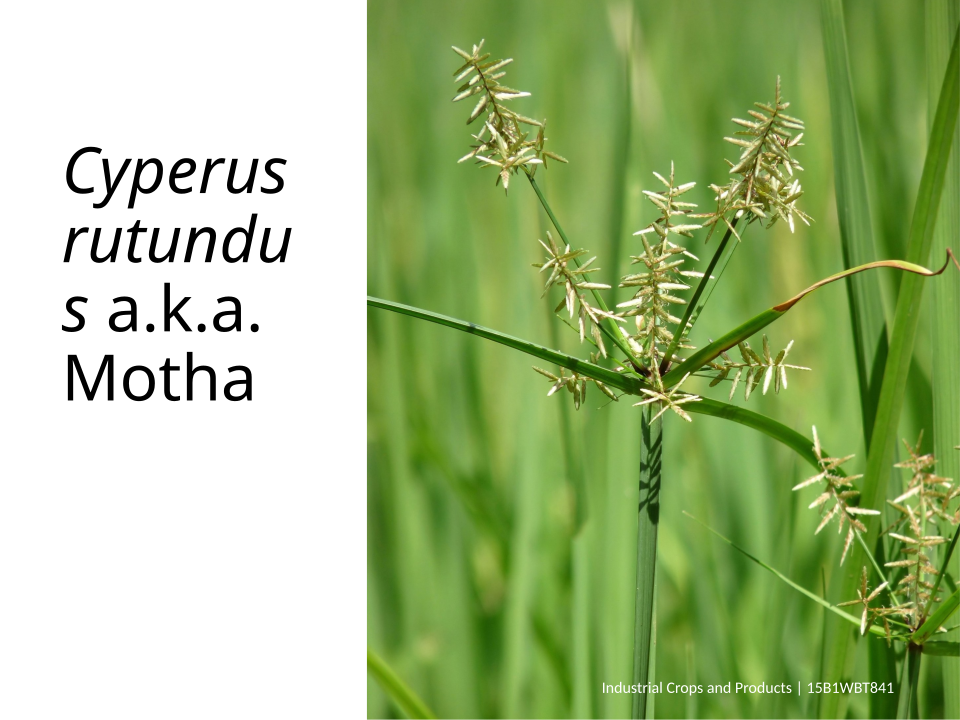
Cyperus rutundu s a.k.a. Motha Industrial Crops and Products | 15B1WBT841
Cynodan dactylon a.k.a. Doob
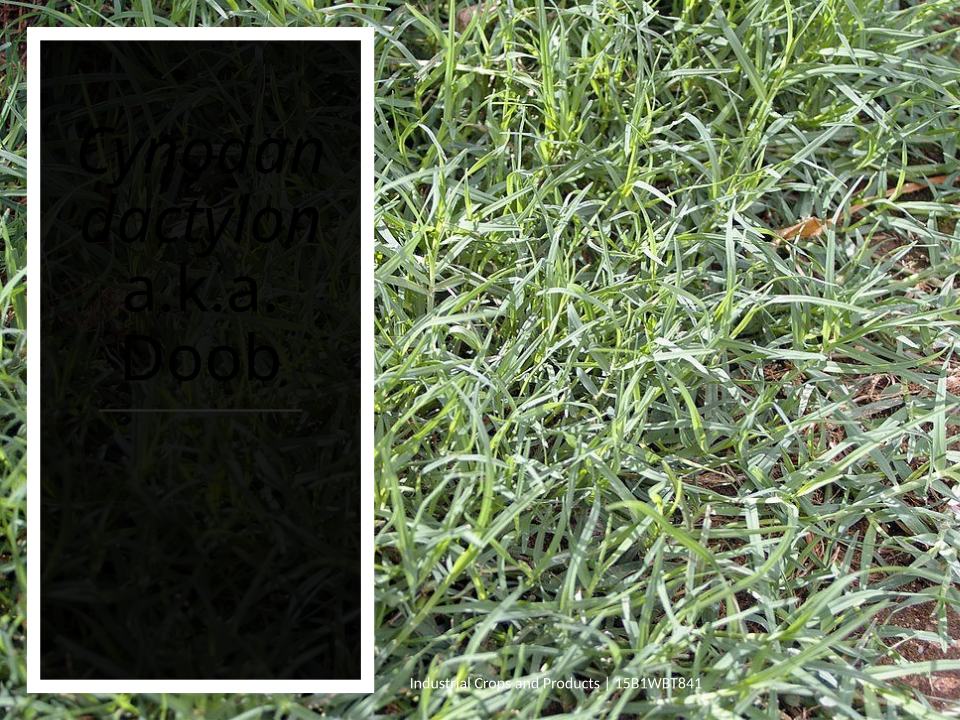
Cynodan dactylon a.k.a. Doob Industrial Crops and Products | 15B1WBT841
Sorghum Halepense a.k.a. Ban Chari
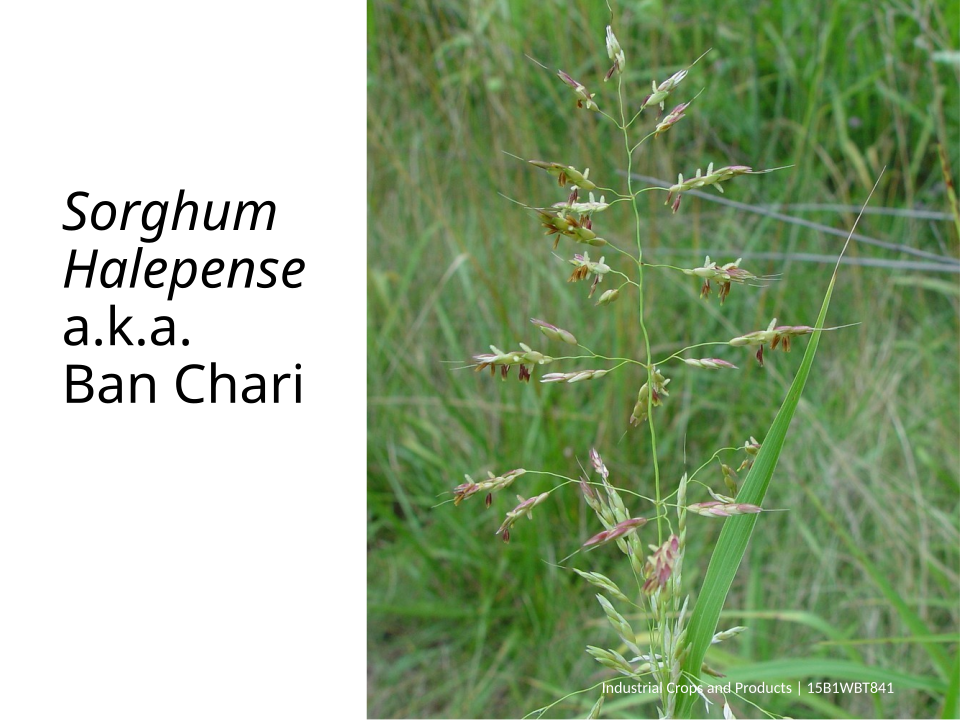
Sorghum Halepense a.k.a. Ban Chari Industrial Crops and Products | 15B1WBT841
Rainy Sugarcane

Rainy Sugarcane Industrial Crops and Products | 15B1WBT841
Echinochlo a colonum a.k.a. Sama grass
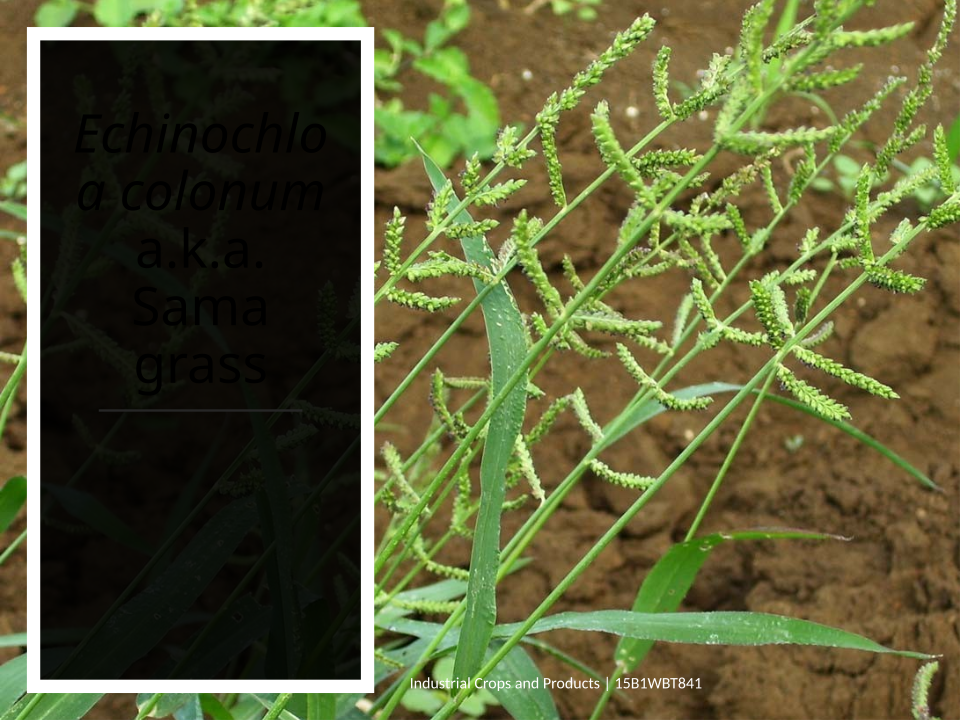
Echinochlo a colonum a.k.a. Sama grass Industrial Crops and Products | 15B1WBT841
Echinochlo a crusgalli a.k.a. Sama grass
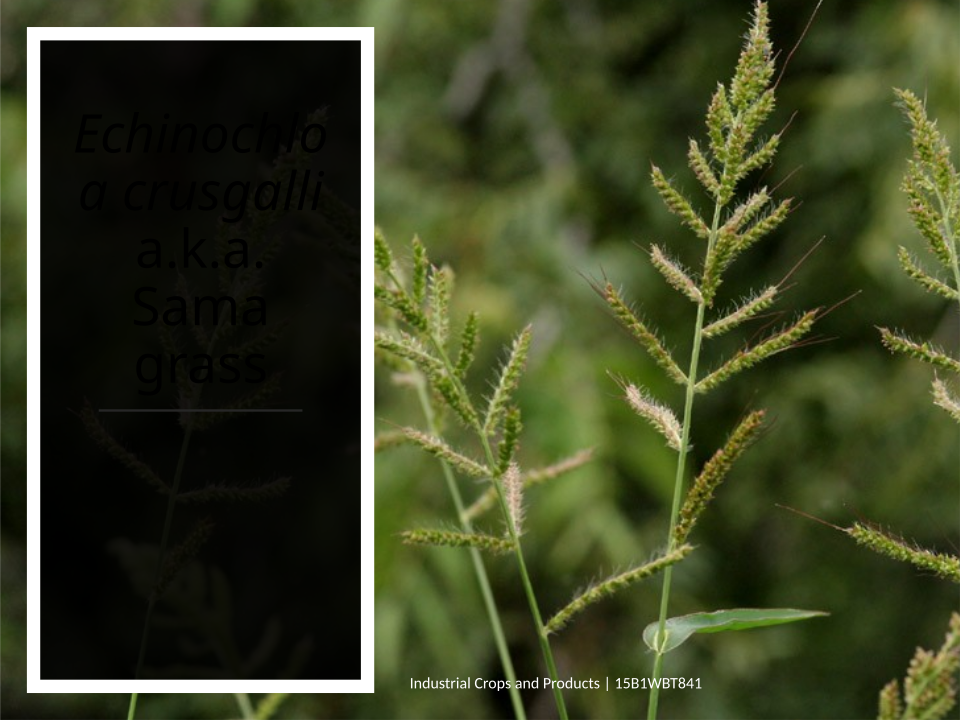
Echinochlo a crusgalli a.k.a. Sama grass Industrial Crops and Products | 15B1WBT841
Chemical Methods in Weed Control
Chemical Methods in Weed Control 2, 4-D specifically kills broadleaf weeds in Autumn Cane Applied 25-30 days after planting or before the weeds attain 3-4 leaf stage Rate of application : 1 kilograms/hectare in 500-600 liter of water Industrial Crops and Products | 15B1WBT841
Rate of application : 2 kilograms/hectare in 500- 600 liter of water followed by 1 kilograms/hectare 2, 4-D, after 60 da
Atrazine is used for weed control in Spring Cane Applied just after planting Rate of application : 2 kilograms/hectare in 500600 liter of water followed by 1 kilograms/hectare 2, 4-D, after 60 days of planting (MOST EFFECTIVE) Industrial Crops and Products | 15B1WBT841
Harvesting
Harvesting Early December in northern parts of India But, the content of juice keeps on rising till March end Maturity Recognition is confirmed by : • Withering of lower leaves • Fever green leaves on the top • Hand Sugar Refractometer : Test the sample from middle portion of stalk Reading : 17-18 => Ready to Harvest Industrial Crops and Products | 15B1WBT841
Yield
Yield Average yield of 11-12 months old planted crop is 400 – 500 quintals/hectare of cane (Northern India) Good crop : 800 – 1000 quintals/hectare Average yield of 18 months old crop is 1000 – 1200 quintals/hectare (Southern India Maharashtra) Industrial Crops and Products | 15B1WBT841 TN and
References
References Singh, C. (2008). Modern Techniques of Raising Field Crops: pp 465 - 489 Oxford & IBH Photographs retrieved from Wikimedia Commons on 4/7/17 Industrial Crops and Products | 15B1WBT841
Thank You !

Thank You ! Industrial Crops and Products | 15B1WBT841