A humble request to all, Please ask questions or doubts at the end of the presentation. You can note down the slide numb

A humble request to all, Please ask questions or doubts at the end of the presentation. You can note down the slide number given at the bottom-right corner of every slide.
Simulation of Prokaryotic Genetic Circuits
Simulation of Prokaryotic Genetic Circuits Abhinav Mishra 131503 | 7th Semester
Overview
Overview • Organization of Genetic Regulatory Circuits • Simulations of Cellular Regulation • Modelling
Why Simulations needed ? are
Why Simulations needed ? To identify design principles • biochemically based logic. are for the To understand the dynamical response of both • normal and mutant cells to environmental and interval signals. To predict quantitative effects of mutations on • regulatory outcomes. To verify consistency and completeness of • hypotheses reactions systems.
What are the challenges in Simulations ?
What are the challenges in Simulations ? Developing simulation techniques applicable to cellular processes where genetic regulation is centrally important. • Developmental Differentiation • Facultative Infection Process • Cell Cycle Control In ’61 Cold Spring Harbor Conference on cellular Regulatory Mechanism, regulatory nets are characterized as ‘Circuits’.
Regulatory circuits
Regulatory circuits Hierarchical organization • Regulons – control groups of operons • Global regulons – multiple pathway regulation (e.g. IHF , σ32 ) • Often neglected in simulations • However , needed in some circumstances (e.g. 2 σ factors competing)
Regulatory feedback
Regulatory feedback • Output influences input signals • Auto regulatory feedback loops • In E.coli, there are 107 σ70 promoters 68% auto regulating 13% auto activating • Specialized enzymes often under regulatory control
What defines the logic that how well the cell functions at any instant?
What defines the logic that how well the cell functions at any instant? Complement of distinct molecules in the cell State of DNA | Methylation or Demethylation
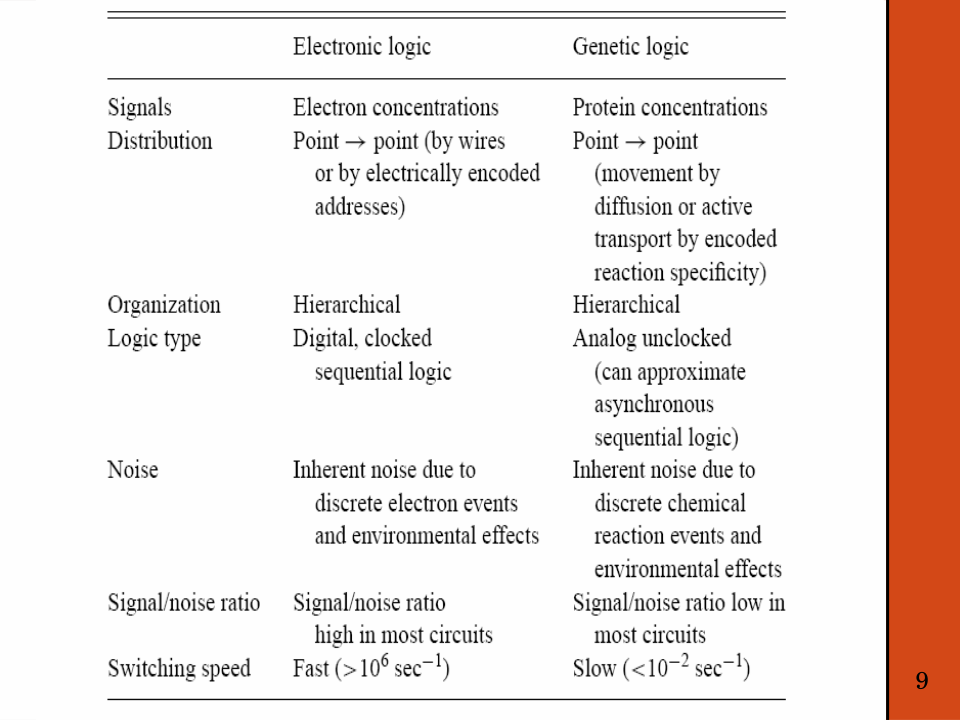
Table comparing electronic logic and genetic logic: signals, distribution, organization, logic type, noise, signal-to-noise ratio and switching speed
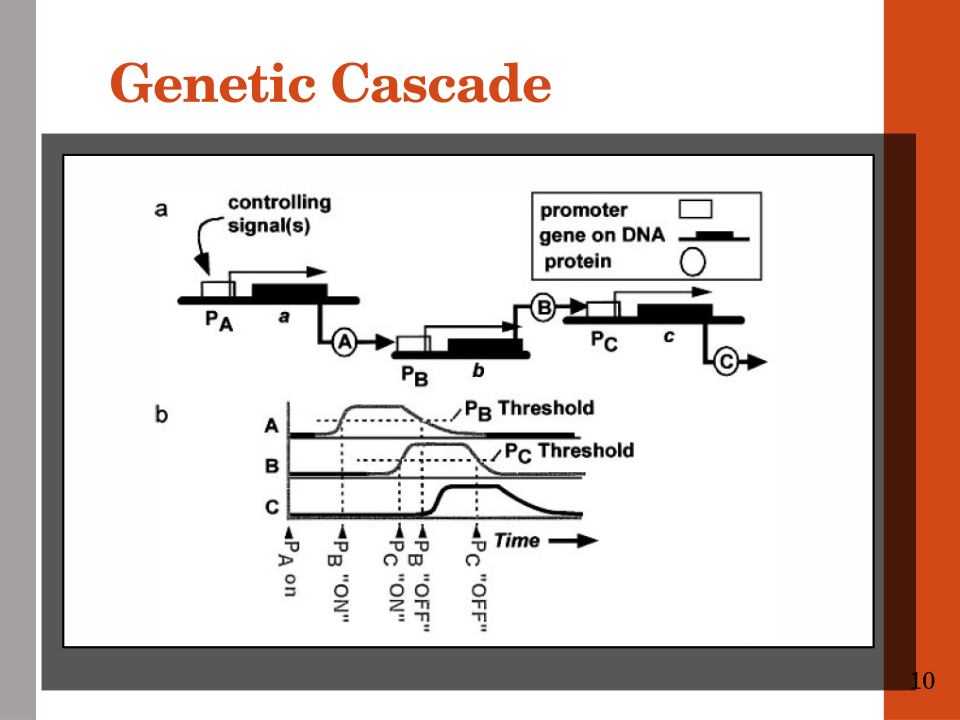
Genetic Cascade
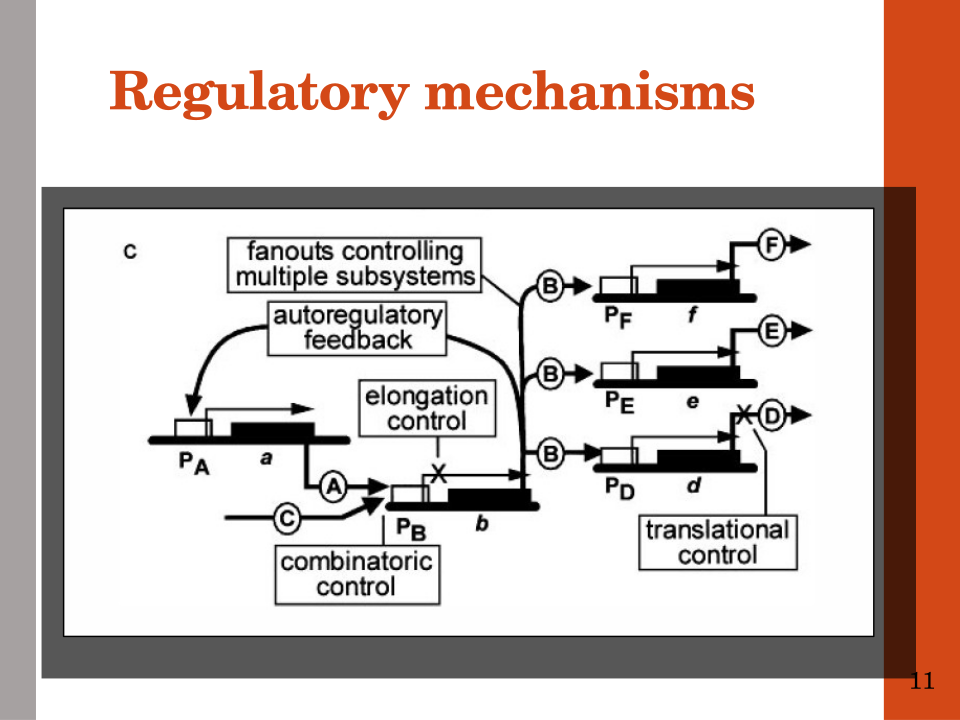
Regulatory mechanisms
Integrating environmental signals
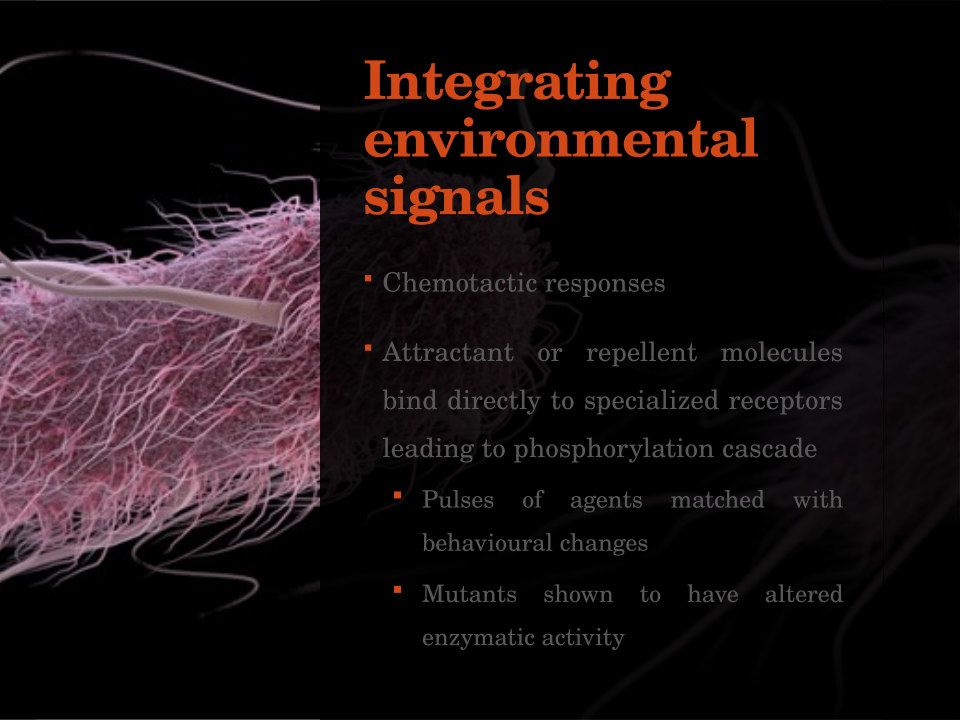
Integrating environmental signals Chemotactic responses Attractant or repellent molecules bind directly to specialized receptors leading to phosphorylation cascade Pulses of agents matched with behavioural changes Mutants shown to have altered enzymatic activity
Cell cycle models
Cell cycle models • Genetic regulation coupling to cell cycle • Modelling of biochemical reactions that support oscillations p34activation, p34/cyclin interactions and cyclin degradation suggested However shown to be far more elaborate
Developmental Switches
Developmental Switches • Different physiological states require switching mechanisms • Cell-density-dependent gene expression Quorum-sensing Higher density Higher peptide Pheromone concentration Lytic/Lysogenic determination
Modelling
Modelling • Promoter control Models • Stochastic processes in regulatory kinetics • Modelling macromolecular complexes • Uncertainty in intracellular environment and reaction rates
Promoter Control Models
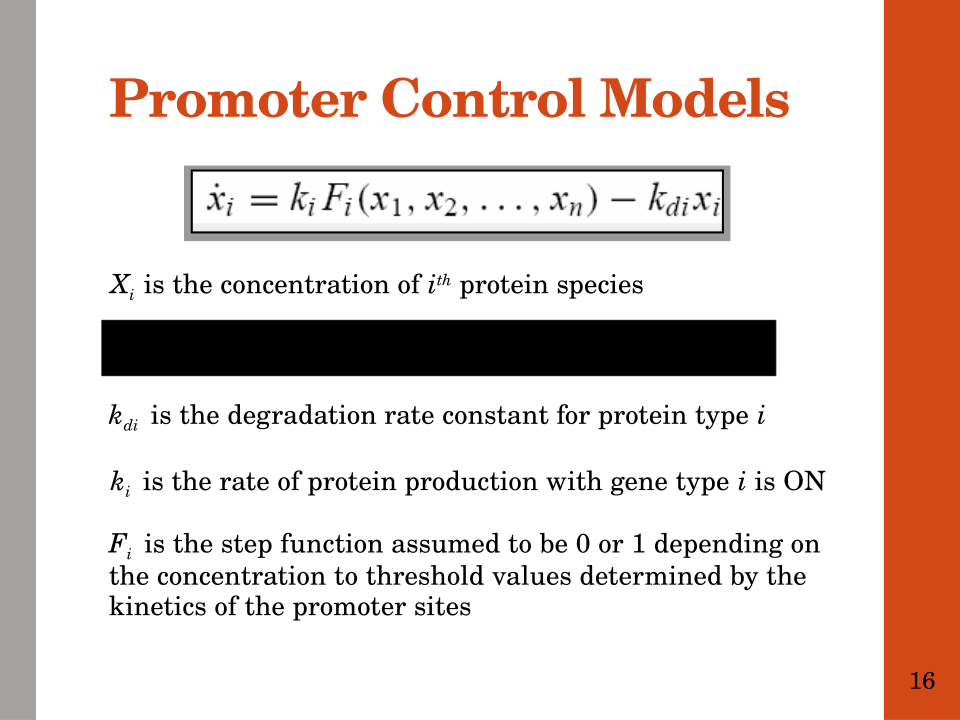
Promoter Control Models Xi is the concentration of ith protein species kdi is the degradation rate constant for protein type i ki is the rate of protein production with gene type i is ON Fi is the step function assumed to be 0 or 1 depending on the concentration to threshold values determined by the kinetics of the promoter sites
Assumptions in Boolean Network
Assumptions in Boolean Network • The state of each gene or other network element can be characterized as either on (one) or off (zero). • The combinational control of gene expression can be reduced to a “wiring diagram” of the network. • The computation of the interactions indicated by the wiring diagram can be approximated by Boolean combinational logic rules. • All elements (to first approximation) update their on or off states synchronously. Software used: D.D.L. (Discrete Dynamics Lab) that computes the behavior of hypothetical networks.
Limitation of Boolean Network
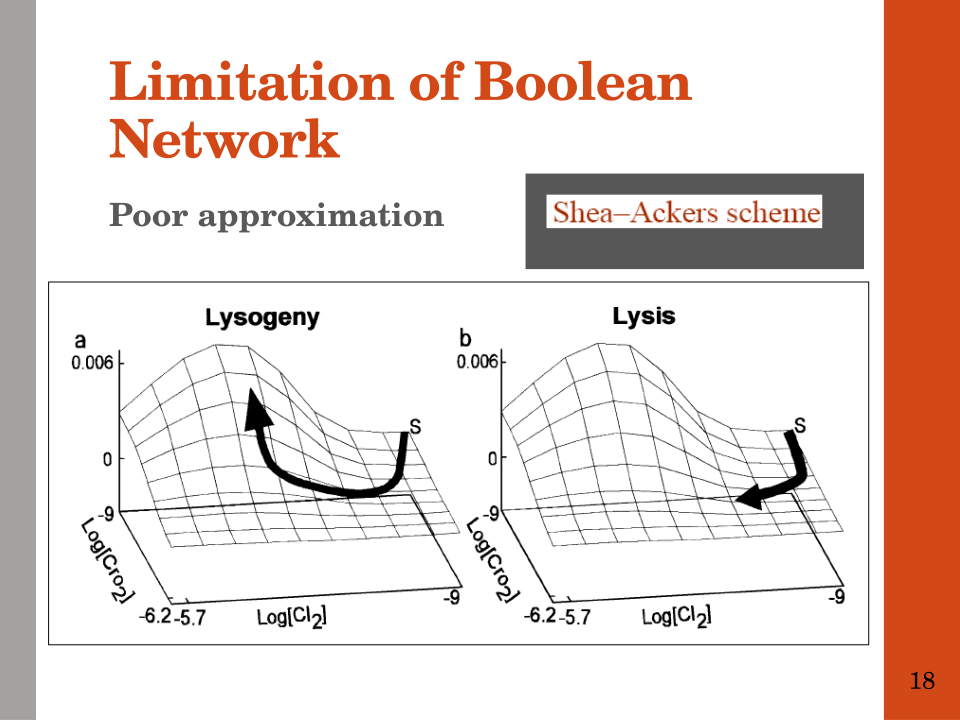
Limitation of Boolean Network Poor approximation
• Cro repressor acts to turn off early gene • CI repressor maintains lysogenic growth Together, they are known as
Bacteriophage λ encodes two repressor proteins • Cro repressor acts to turn off early gene transcription during lytic cycle • CI repressor maintains lysogenic growth Together, they are known as
Other control mechanism
Other control mechanism Termination sites activation control Many post-transcriptional regulations Many protein-mediated controls Proteolysis Phosphorylation Methylation
Stochastic Process
Stochastic Process • Model macroscopic kinetics of chemical reactions using ordinary differential equations • Difficult to achieve in genetic reaction due to spatial isolation, low concentration and slow reaction rates • Gillespie Algorithm – calculating the probabilistic outcome of each discrete chemical event • State vector characterize the states of the system.
There are two fundamental ways to view coupled systems of chemical equations: Continuous, represented by differential
There are two fundamental ways to view coupled systems of chemical equations: Continuous, represented by differential equations whose variables are concentrations Discrete, represented by stochastic processes whose variables are numbers of molecules.
Gillespie Algorithm
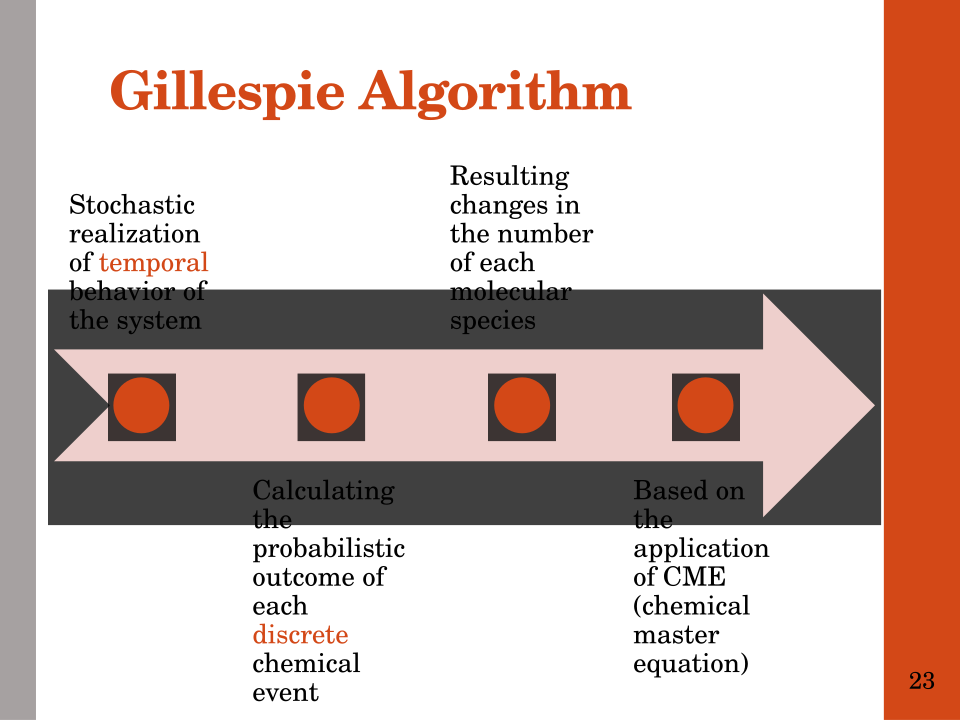
Gillespie Algorithm Resulting changes in the number of each molecular species Stochastic realization of temporal behavior of the system Calculating the probabilistic outcome of each discrete chemical event Based on the application of CME (chemical master equation)
Gillespie Algorithm
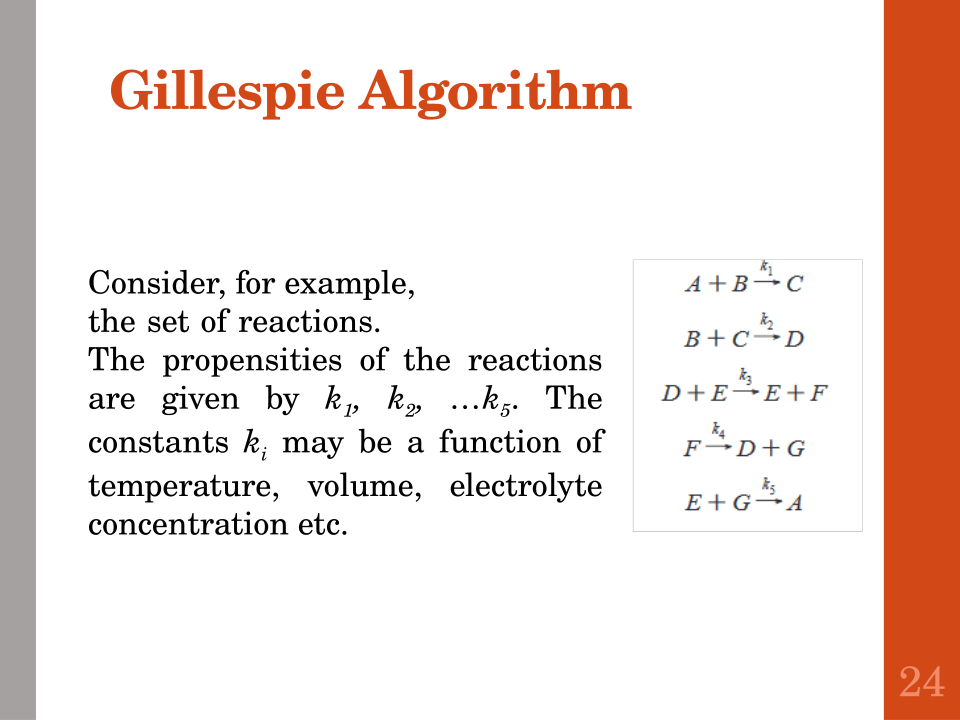
Gillespie Algorithm Consider, for example, the set of reactions. The propensities of the reactions are given by k1, k2, …k5. The constants ki may be a function of temperature, volume, electrolyte concentration etc.
Gillespie Algorithm
Gillespie Algorithm Gillespie proposed two simulation algorithms. exact stochastic Consider a system of r reactions and assume every rate constant ki are true constants. At each time step, the system is in exactly one state. A transition consists of executing a reaction so there are at most r possible transitions from a given state. The key is to choose random numbers using a computer random number generator and to use those random numbers to pick transitions.
Gillespie Algorithm
Gillespie Algorithm Direct Method Calculates explicitly which reaction occurs next and when it occurs First Reaction Method Generates for each reaction μ a putative time τμ at which reaction μ occurs, then chooses the reaction μ* with the smallest time τμ* (the first reaction) and executes reaction μ* at time τμ*
Gillespie Algorithm : Direct Method
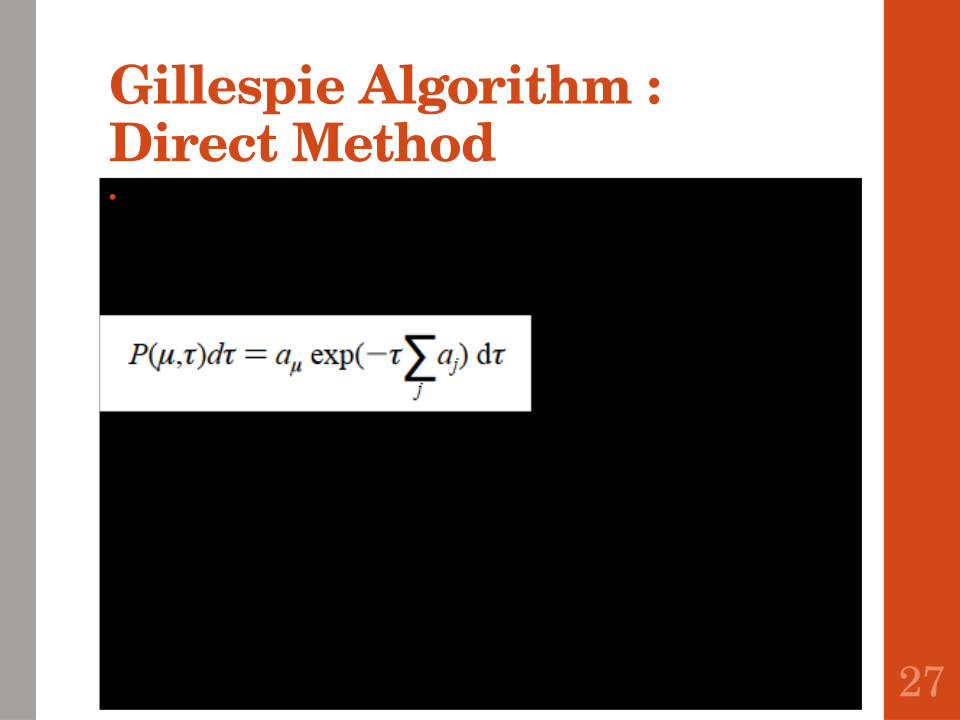
Gillespie Algorithm : Direct Method
Gillespie Algorithm : First Reaction Method
Gillespie Algorithm : First Reaction Method Generates a putative time τi for each reaction to occur - a time the reaction would occur if no other reaction occurred first - then lets µ be the reaction whose putative time is first, and lets τ be the putative time τμ. The algorithm of the previous subsection is direct in the sense that it generates µ and τ directly.
Gillespie Algorithm : First Reaction Method
Gillespie Algorithm : First Reaction Method
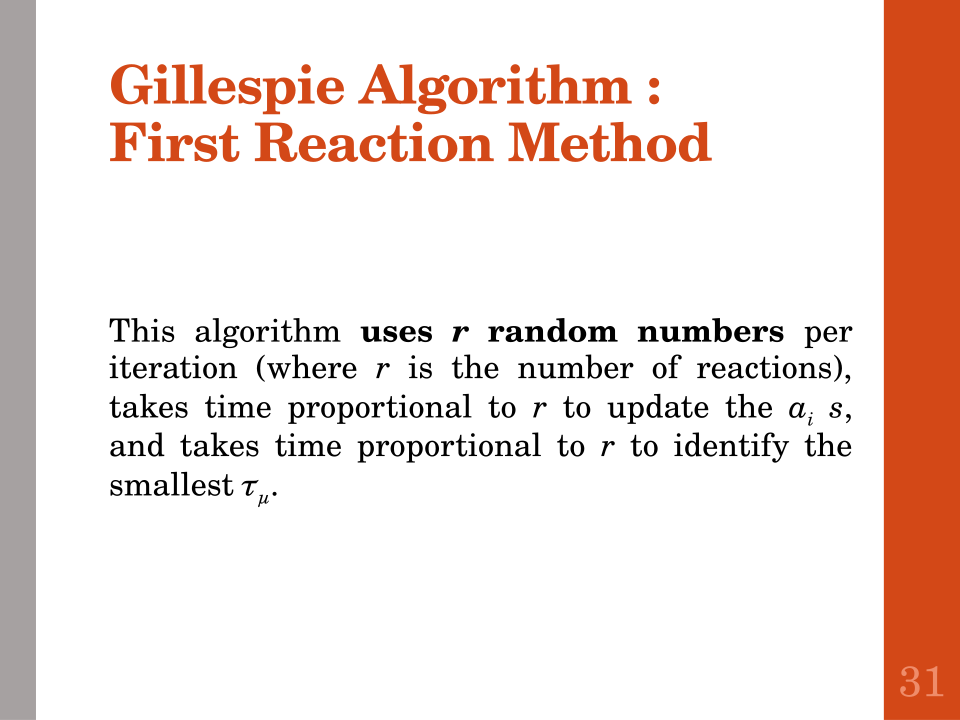
Gillespie Algorithm : First Reaction Method This algorithm uses r random numbers per iteration (where r is the number of reactions), takes time proportional to r to update the ai s, and takes time proportional to r to identify the smallest τμ.
Stochastic Process
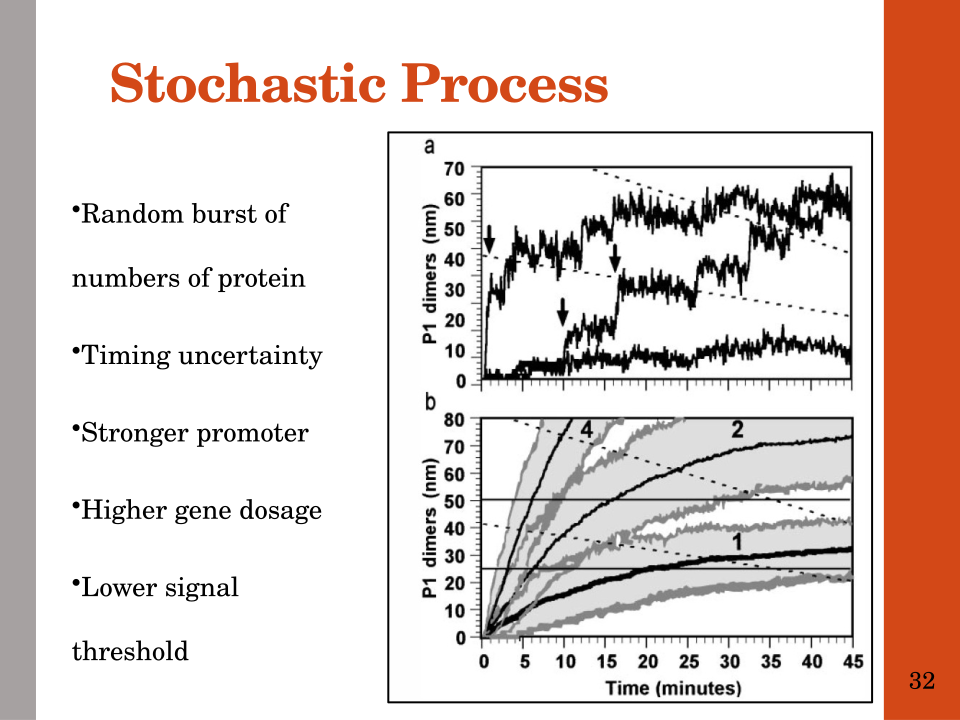
Stochastic Process •Random burst of numbers of protein •Timing uncertainty •Stronger promoter •Higher gene dosage •Lower signal threshold
Stochastic Process
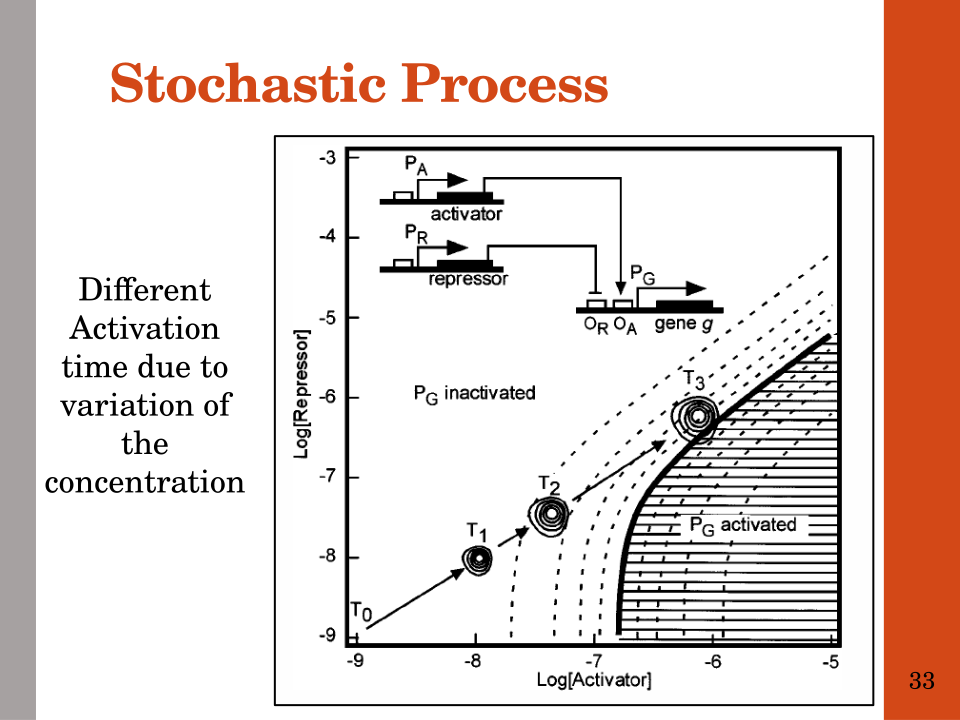
Stochastic Process Different Activation time due to variation of the concentration
Modelling macromolecular complex
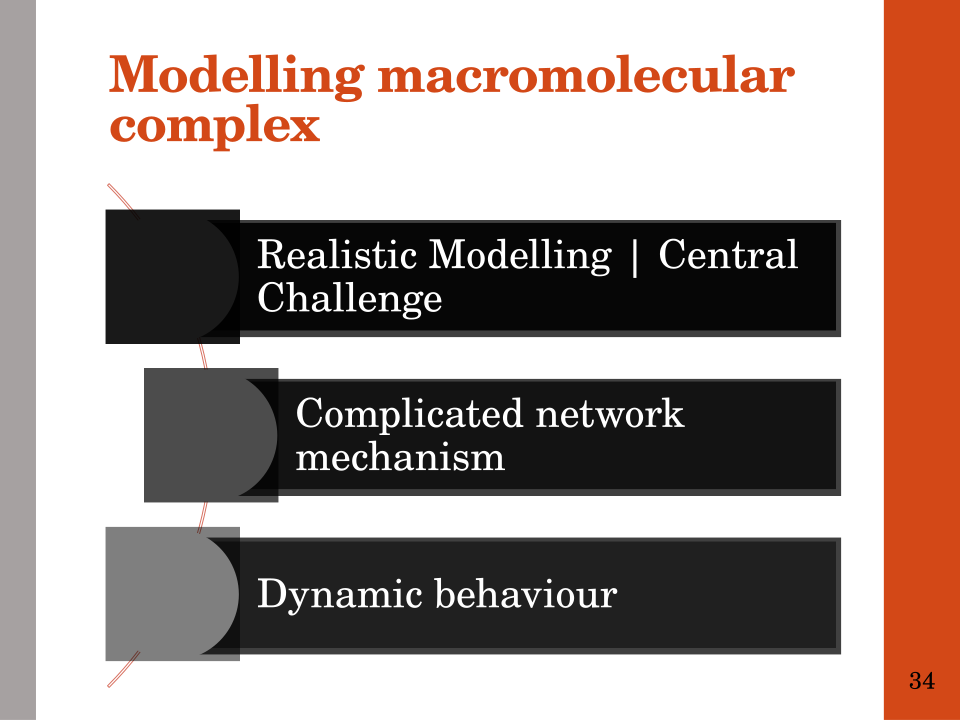
Modelling macromolecular complex Realistic Modelling | Central Challenge Complicated network mechanism Dynamic behaviour
Uncertainty of Intracellular Reaction Features
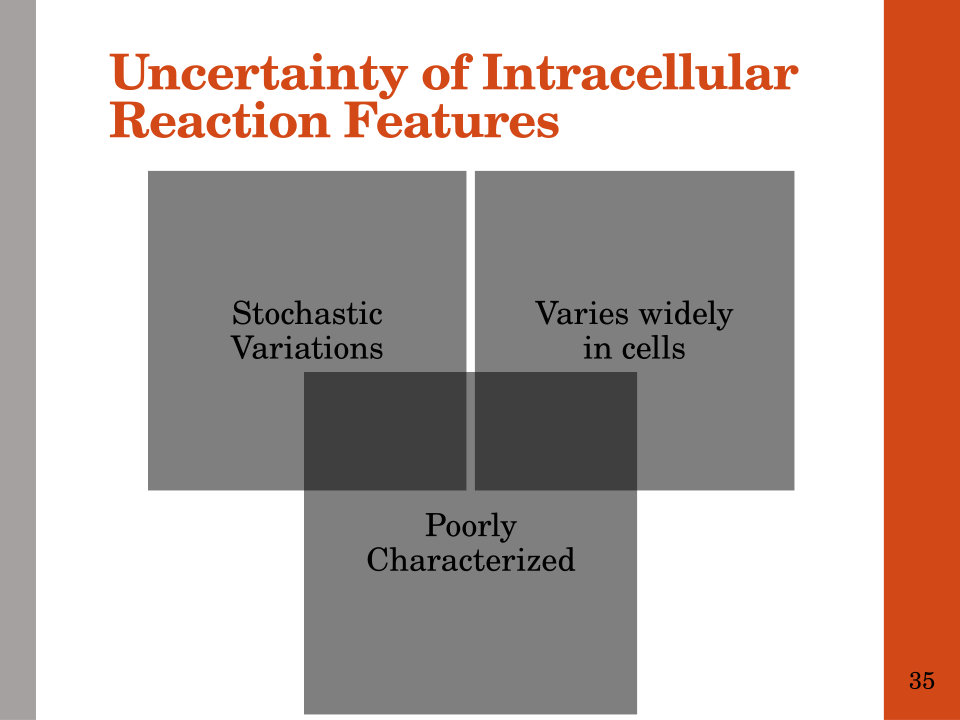
Uncertainty of Intracellular Reaction Features Stochastic Variations Varies widely in cells Poorly Characterized
Challenges
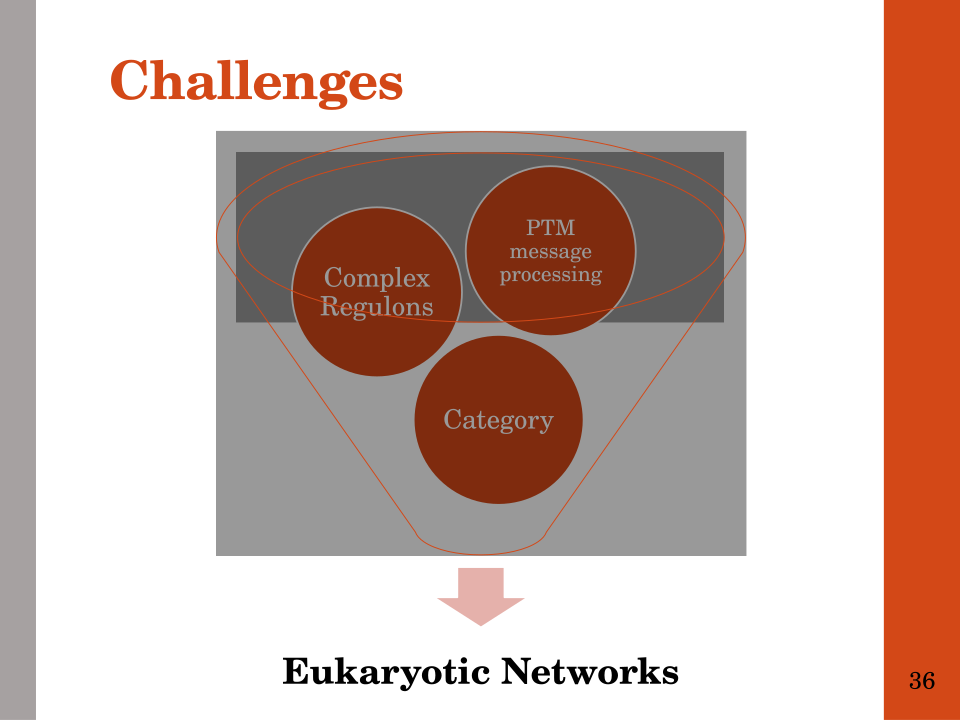
Challenges Complex Regulons PTM message processing Category Eukaryotic Networks
Opportunities
Opportunities • To recognize Common Circuit Motifs. • To identify function of individual protein in regulatory control mechanisms. • To redesign circuit for altered functions.
References
References • McAdams, H. H. and A. Arkin "Simulation of prokaryotic genetic circuits." Annu Rev Biophys Biomol Struct 27: 199-224. • Gillespie, D. T. (1992). "A rigorous derivation of the chemical master equation." Physica A: Statistical Mechanics and its Applications 188(1): 404-425. • Gibson, M. A. and J. Bruck (2000). "Efficient Exact Stochastic Simulation of Chemical Systems with Many Species and Many Channels." The Journal of Physical Chemistry A 104(9): 1876-1889.
Further Readings
Further Readings • Smadbeck, P. and Y. N. Kaznessis (2014). "Solution of Chemical Master Equations for Nonlinear Stochastic Reaction Networks." Curr Opin Chem Eng 5: 90-95. • Gillespie, D. T. (1976). "A general method for numerically simulating the stochastic time evolution of coupled chemical reactions." Journal of Computational Physics • Gillespie, D. T. (1977). "Exact stochastic simulation of coupled chemical reactions." The Journal of Physical Chemistry 81(25): 2340-2361. • Miller, M. B. and B. L. Bassler (2001). "Quorum sensing in bacteria." Annu Rev Microbiol 55: 165-199. • Shea, M. A. and G. K. Ackers (1985). "The OR control system of bacteriophage lambda. A physical-chemical model for gene regulation." J Mol Biol 181(2): 211-230.
• Brophy, J. A. N. and C. A. Voigt (2014). “Principles of genetic circuit design.” Nat Meth 11(5): 508-520. • Gillespie,
• Brophy, J. A. N. and C. A. Voigt (2014). "Principles of genetic circuit design." Nat Meth 11(5): 508-520. • Gillespie, D. T. (1976), 'A general method for numerically simulating the stochastic time evolution of coupled chemical reactions', Journal of Computational Physics 22 • Gillespie, D. T. (2007). "Stochastic simulation of chemical kinetics." Annu Rev Phys Chem 58: 35-55. • Li, H., et al. (2008). "Algorithms and software for stochastic simulation of biochemical reacting systems." Biotechnol Prog 24(1): 56-61. • Hyver, C. and H. Le Guyader (1990). "MPF and cyclin: modelling of the cell Biosystems 24(2): 85-90. cycle minimum oscillator."
Thank You.