Scaling up genetic circuit design for cellular computing: advances and prospects
Scaling up genetic circuit design for cellular computing: advances and prospects Abhinav Mishra IIIT-H
INTRODUCTION
INTRODUCTION Survive and Reproduce <= Signal sensing Cells Internal External Synthetic Biology The design and engineering of biologically-based parts, novel devices and system as well as the redesign of existing natural biological system. (No Universal Definition!)
Key concepts Standardization Modularity Characterization Orthogonality Genetic Circuits Design Test Build Learn
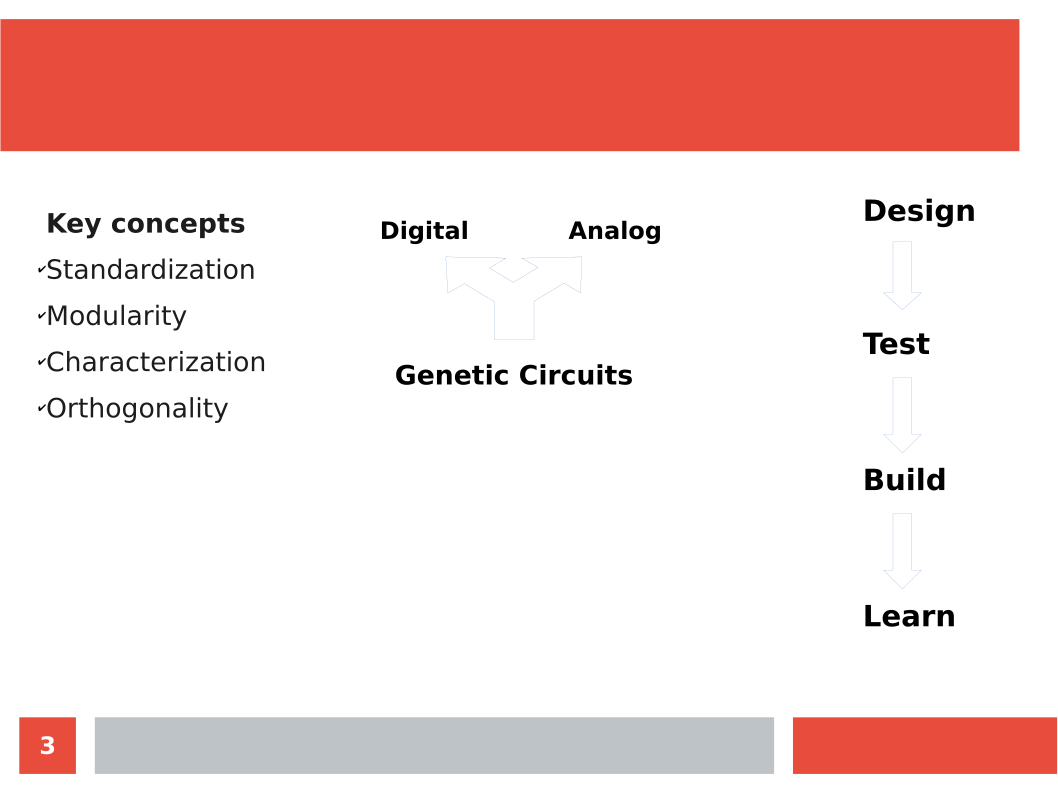
Key concepts Standardization Modularity Characterization Orthogonality Digital Analog Genetic Circuits Design Test Build Learn
FOCUS
FOCUS Digital-like biological parts Tools & Challenges of construction of large scale genetic circuits Common methods genetic Circuits Automated Software gene enabling circuits control of Design Obstacles to Modularity + Context effects + metabolic burden
DBTL
DBTL 1.Design – arrangement of reusable components to produce biological programs 2.Build – large scale DNA assembly 3.Test – High-throughput characterization and debugging tools 4.Learn – Modelling and circuit design automation
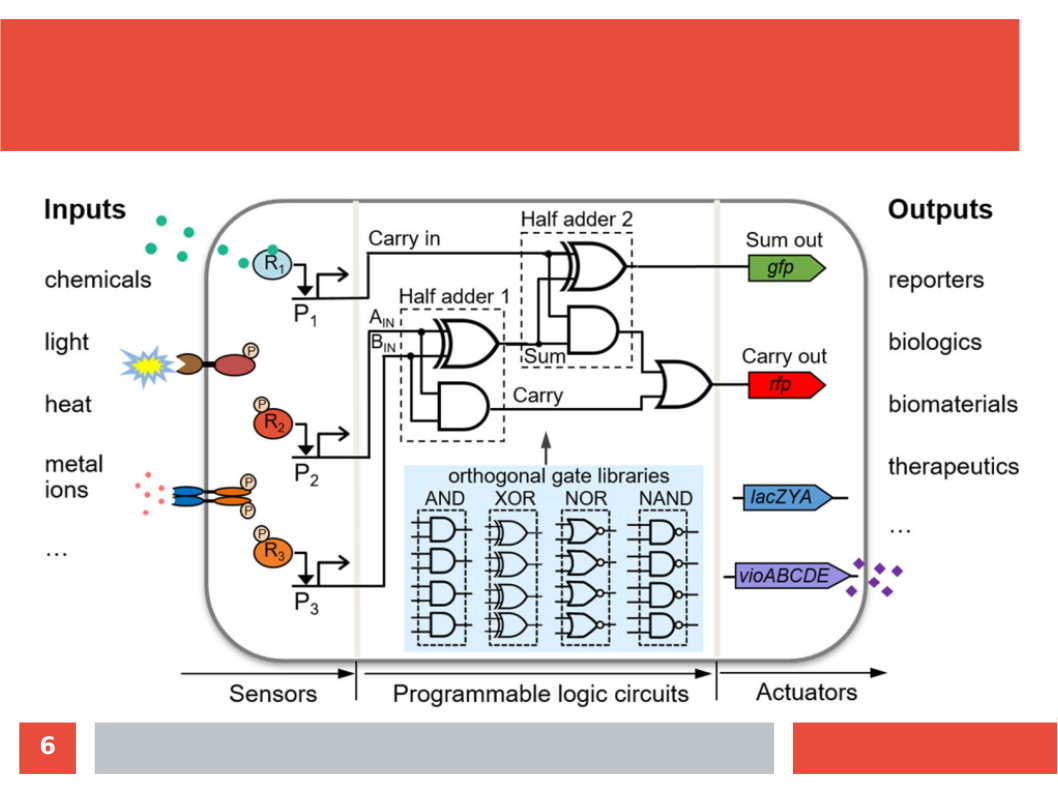
Diagram: sensors (chemicals, light, heat, metal ions) feed programmable logic circuits (a full adder built from half adders, orthogonal AND, XOR, NOR and NAND gate libraries) that drive actuators (gfp, rfp, lacZYA, vioABCDE) for reporters, biologics, biomaterials and therapeutics
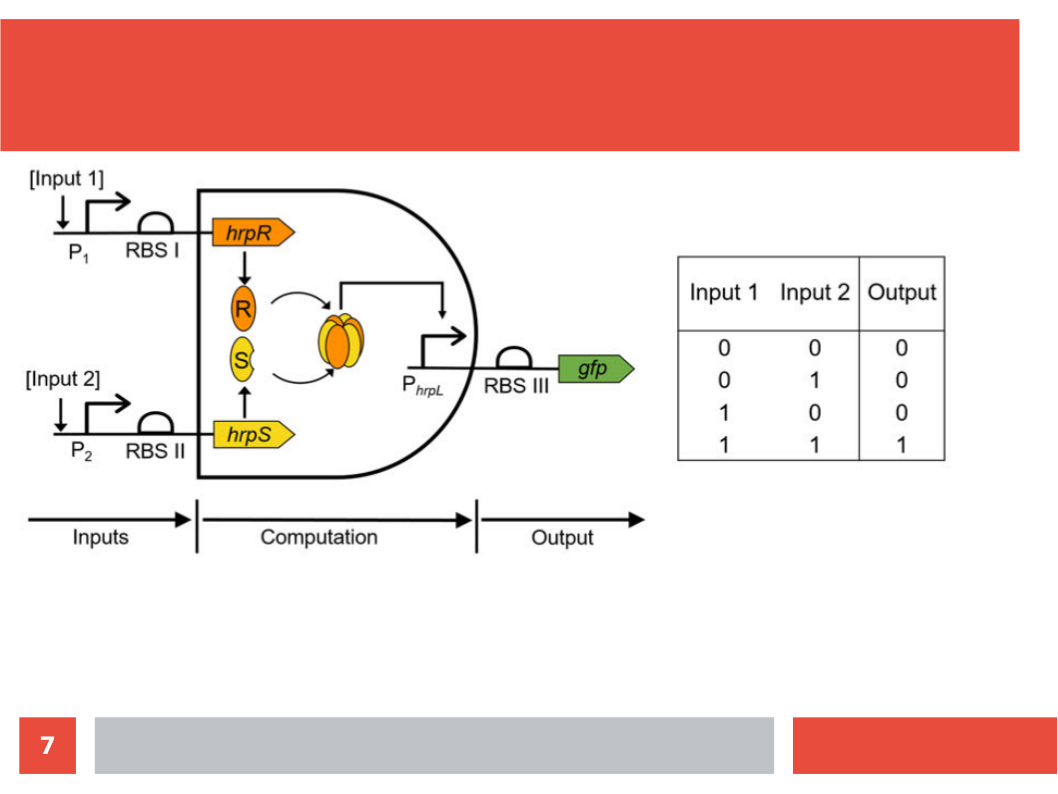
Genetic AND gate: inputs P1 and P2 express hrpR and hrpS, which together activate the hrpL promoter driving gfp, with its truth table
Plot of gene expression against input: an analog (linear, green) and a digital (sigmoidal, black) response
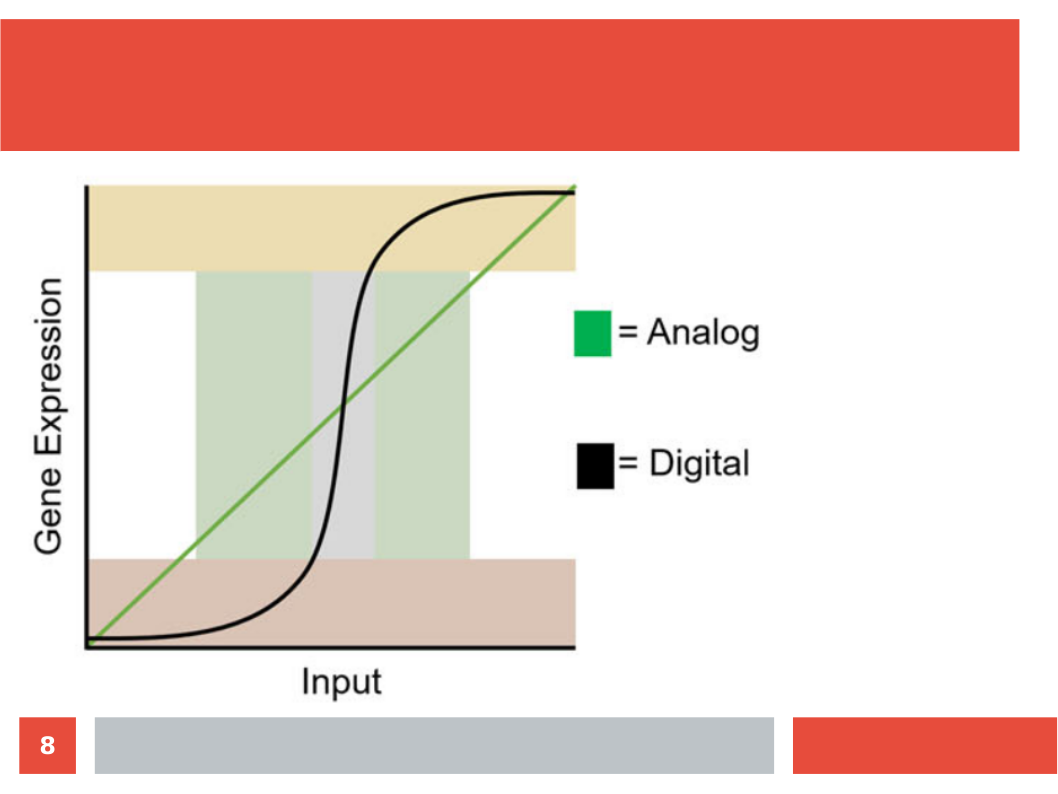
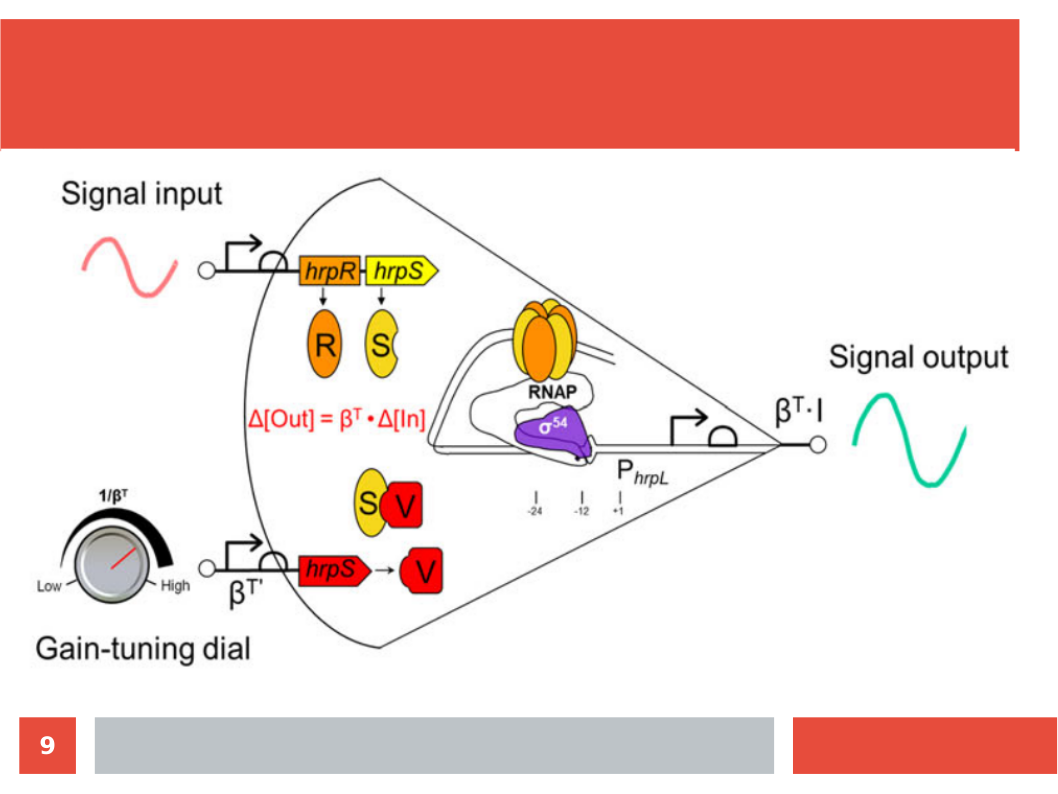
Diagram: a signal input acts through hrpR and hrpS on the hrpL promoter (RNAP, sigma-54) to give a signal output; a gain-tuning dial (low to high, βT) acts through hrpS and hrpV
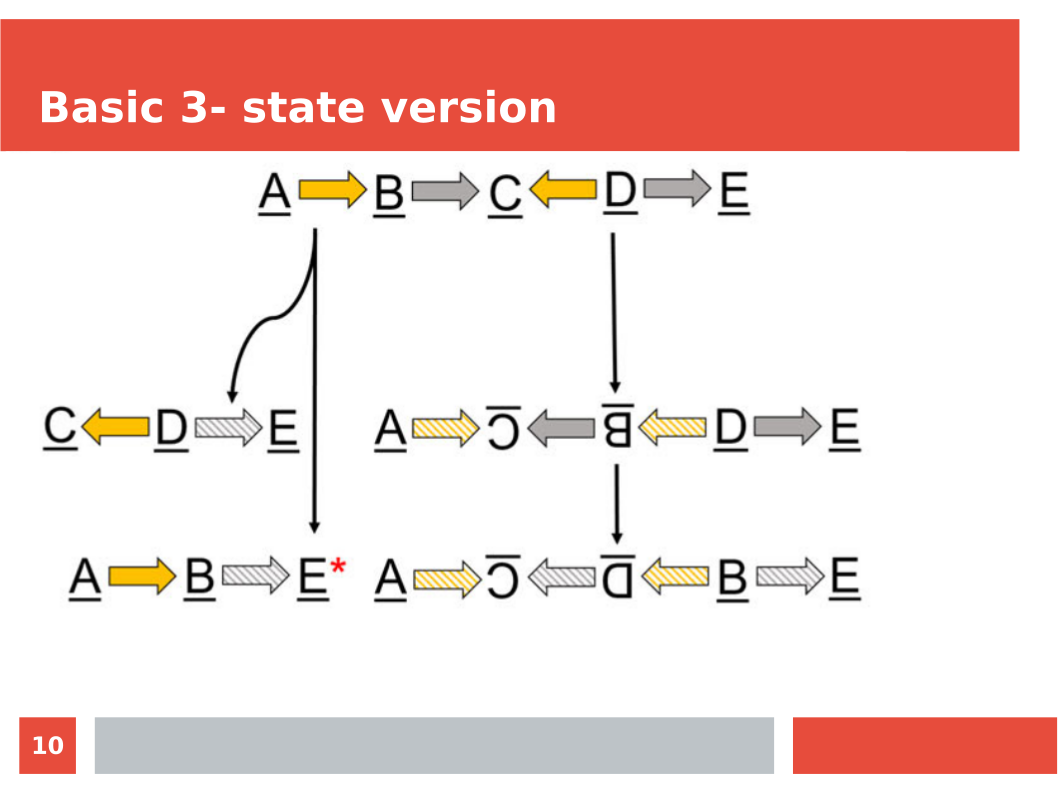
Basic 3- state version
CRISPR (Clustered Regularly Interspaced Short Palindromic Repeats) and CRISPR associated protein (Cas) system stores DNA
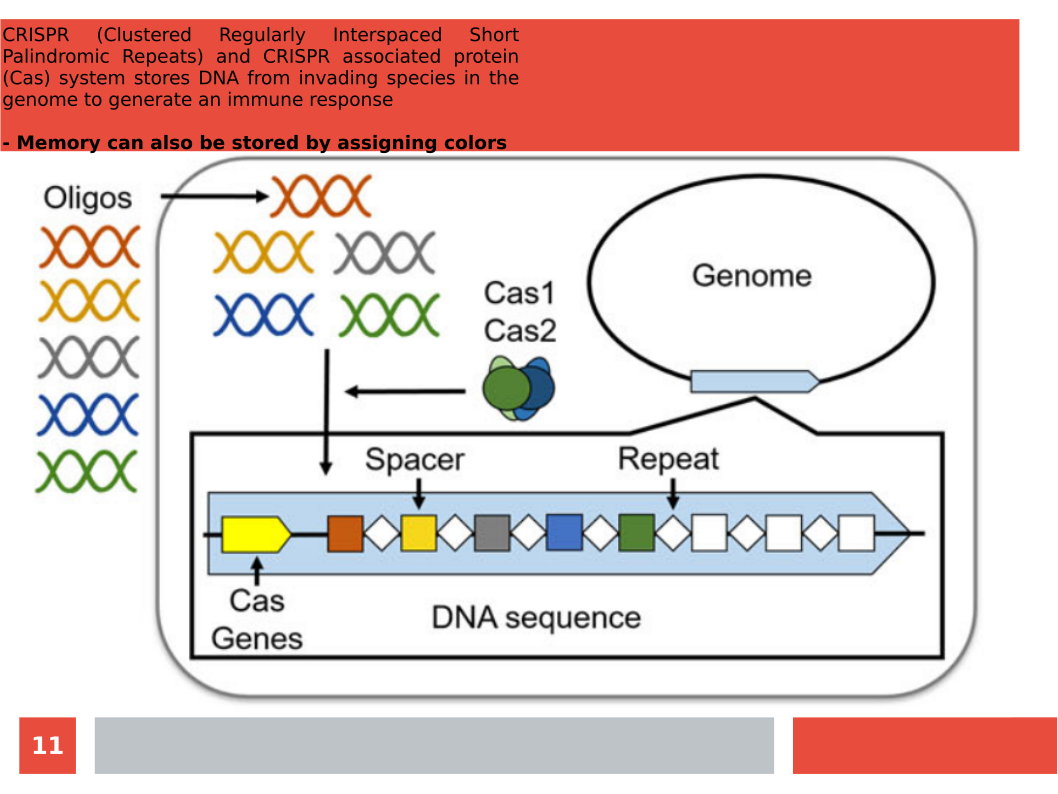
CRISPR (Clustered Regularly Interspaced Short Palindromic Repeats) and CRISPR associated protein (Cas) system stores DNA from invading species in the genome to generate an immune response - Memory can also be stored by assigning colors
- Spatially distributing gene circuits across multiple cells - Replacing the intracellular ‘wires’ with synthetic interc
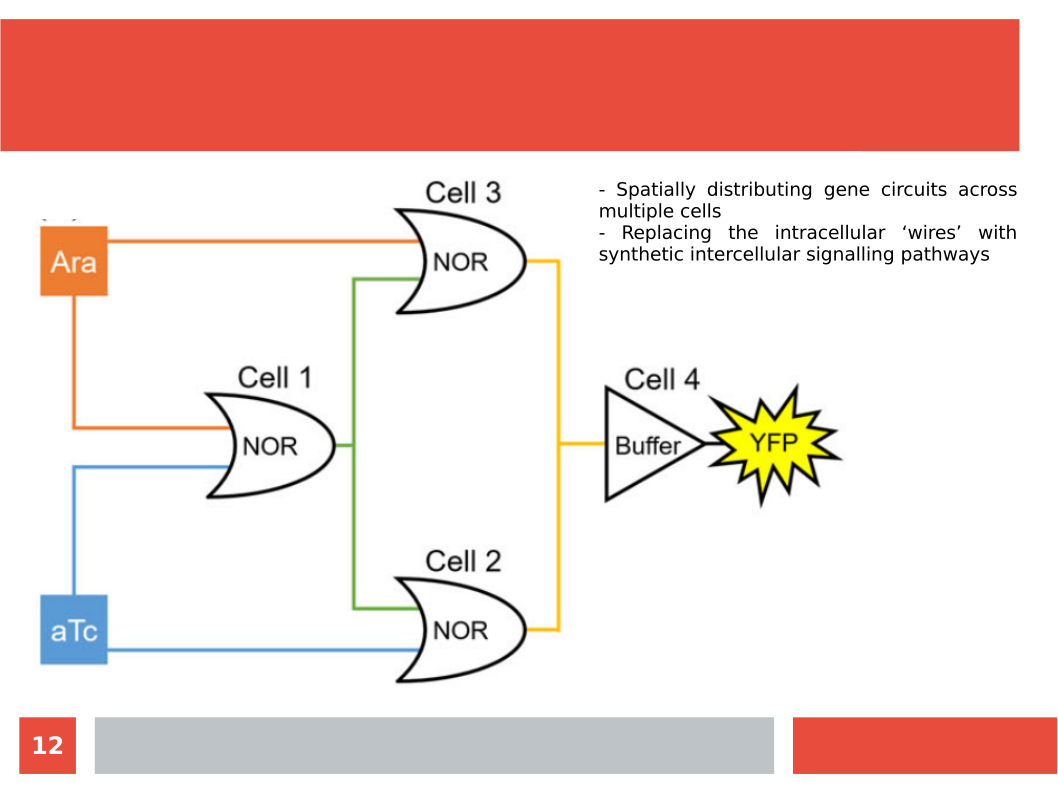
- Spatially distributing gene circuits across multiple cells - Replacing the intracellular ‘wires’ with synthetic intercellular signalling pathways
DESIGN
DESIGN Control of expression using RNA: cleavage pair binding secondary structure Expansion of parts (Tools) : genomic part mining bioinformatics and site directed mutagenesis Inducible parts ---> External Control customizable DNA sequence binding ---> number of orthogonal parts PPI ---> multi-input genetic logic gates
Tuning ‘knobs’
Tuning ‘knobs’ To adjust the dynamic properties of a system to respond effectively to expected inputs and produce desired outputs depending on the need. strength of the promoter sequence hybrid combinations of promoter sequences operator site modification ribosome binding site (RBS) modification altering plasmid copy number using decoy DNA operators RNA interference (RNAi) degradation tags or co-expression with sequestering proteins or molecules
Improvement
Improvement Positive feedback loops and signal cascades have improved the ON/OFF ratio. “Leaky” gene expression Cooperativity has been oligomerization domains improved using
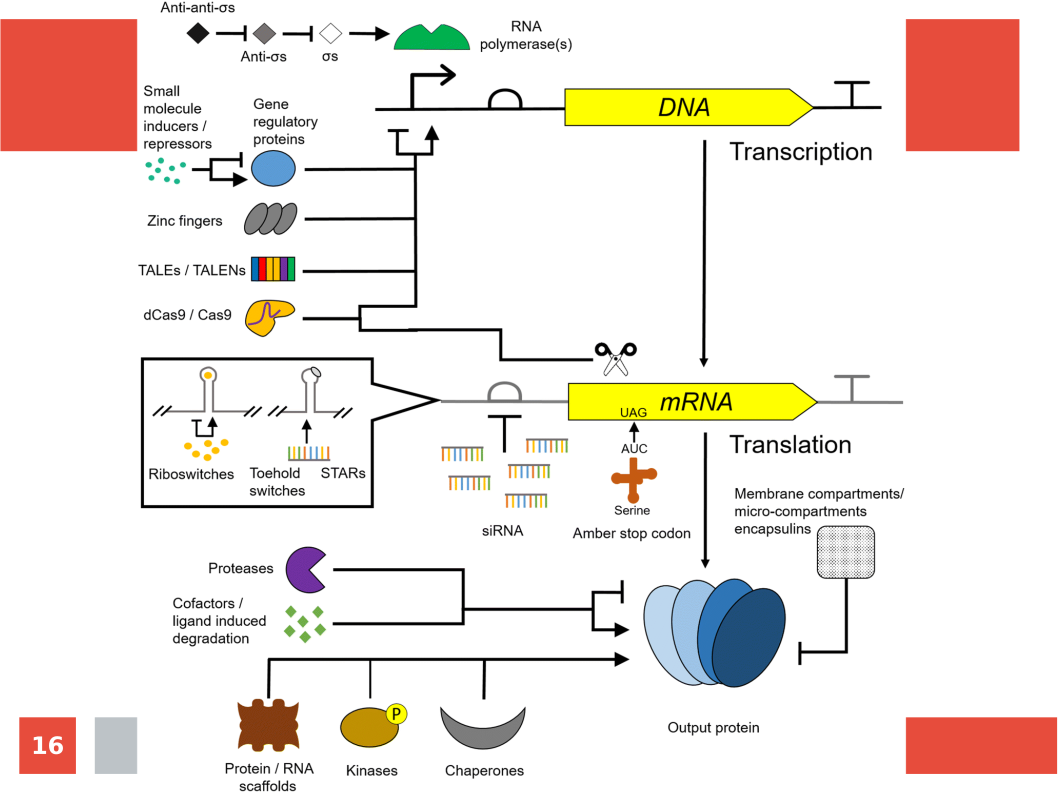
Diagram of the layers of gene regulation: transcription (anti-sigma factors, inducers and repressors, zinc fingers, TALEs, dCas9), translation (riboswitches, toehold switches, STARs, siRNA, amber stop codon) and protein level (proteases, degradation, scaffolds, kinases, chaperones, compartments)
BUILD
BUILD Chemically synthesized standardization genes Initial (2008) --> lengthy mechanisms (eg. BioBricksTM) MoClo Expensive No stepwise restriction enzyme Goldenbraid Latest --> “One Pot” ;multiple fragments can be assembled at once in a defined order
DNA assembly protocols
DNA assembly protocols Gibson assembly (non-synthesis based method) homology of overlapping single stranded DNA which also avoids the necessity of removing forbidden sequences (such as restriction enzyme sites) in the sequences. MODAL (Modular Overlap-Directed Assembly with Linkers) add modular prefixes and suffixes. BASIC (Biopart Assembly Standard for Idempotent Cloning) exploits orthogonal linkers to avoid PCR entirely and achieved over 90% accuracy with a 7-part reaction. Golden Gate-Gibson (3G) combines overhang assembly with Golden Gate style part libraries.
TEST
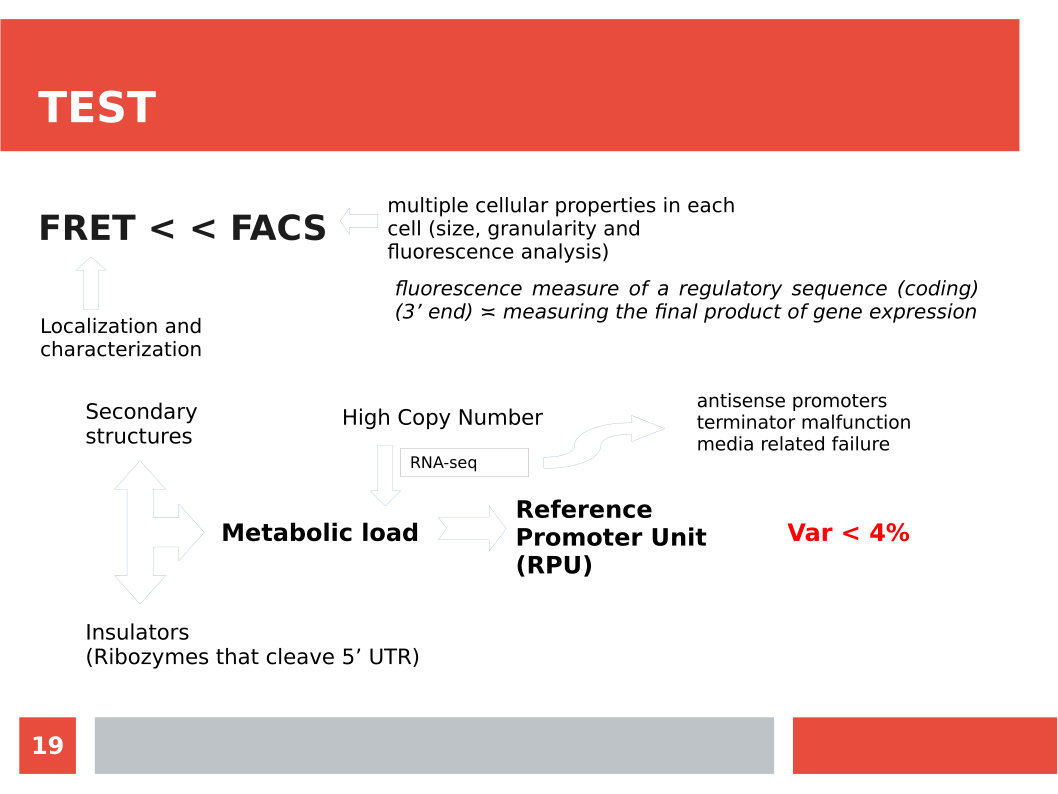
TEST FRET < < FACS Localization and characterization Secondary structures multiple cellular properties in each cell (size, granularity and fluorescence analysis) fluorescence measure of a regulatory sequence (coding) (3’ end) ≍ measuring the final product of gene expression High Copy Number RNA-seq Metabolic load Insulators (Ribozymes that cleave 5’ UTR) antisense promoters terminator malfunction media related failure Reference Promoter Unit (RPU) Var < 4%
Cell free in vitro systems (Prototyping)
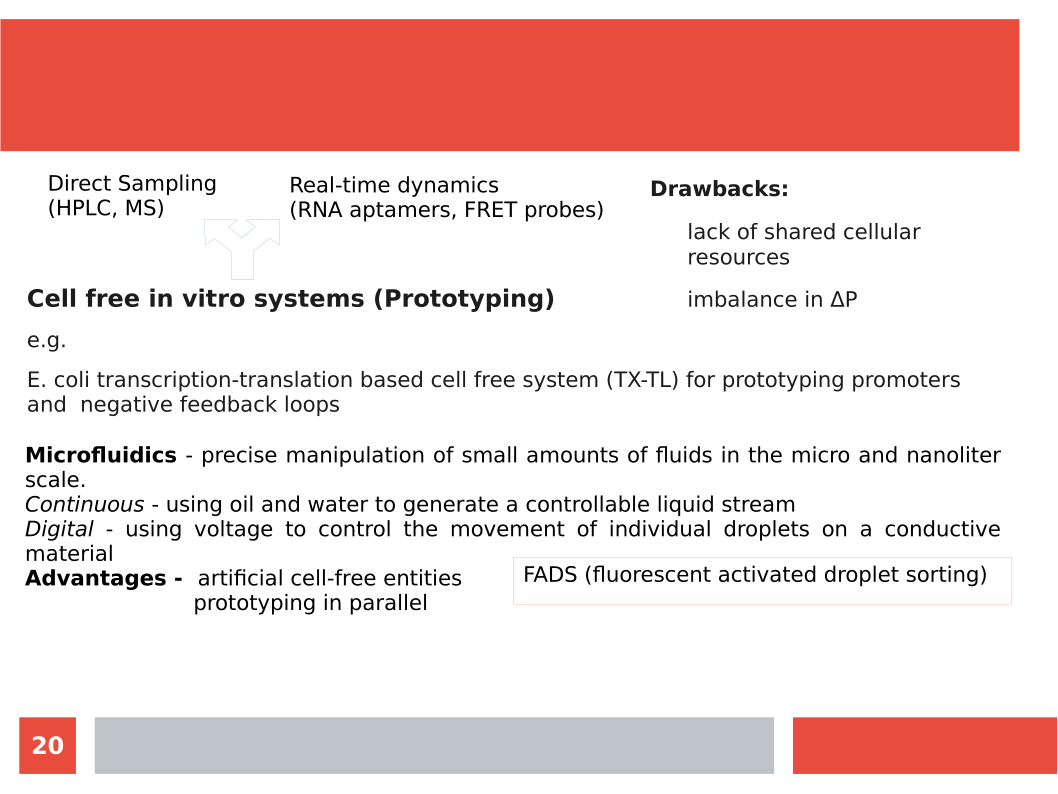
Direct Sampling (HPLC, MS) Real-time dynamics (RNA aptamers, FRET probes) Cell free in vitro systems (Prototyping) Drawbacks: lack of shared cellular resources imbalance in ΔP e.g. E. coli transcription-translation based cell free system (TX-TL) for prototyping promoters and negative feedback loops Microfluidics - precise manipulation of small amounts of fluids in the micro and nanoliter scale. Continuous - using oil and water to generate a controllable liquid stream Digital - using voltage to control the movement of individual droplets on a conductive material FADS (fluorescent activated droplet sorting) Advantages - artificial cell-free entities prototyping in parallel
LEARN
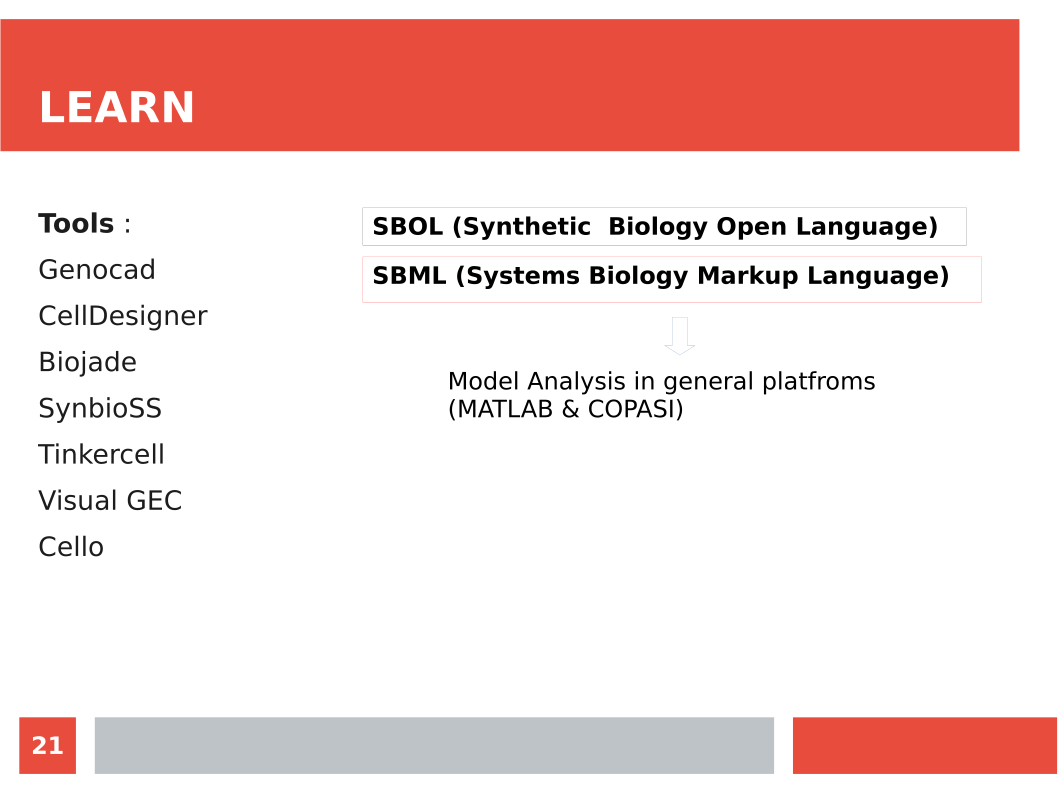
LEARN Tools : SBOL (Synthetic Biology Open Language) Genocad SBML (Systems Biology Markup Language) CellDesigner Biojade SynbioSS Tinkercell Visual GEC Cello Model Analysis in general platfroms (MATLAB & COPASI)
Cello
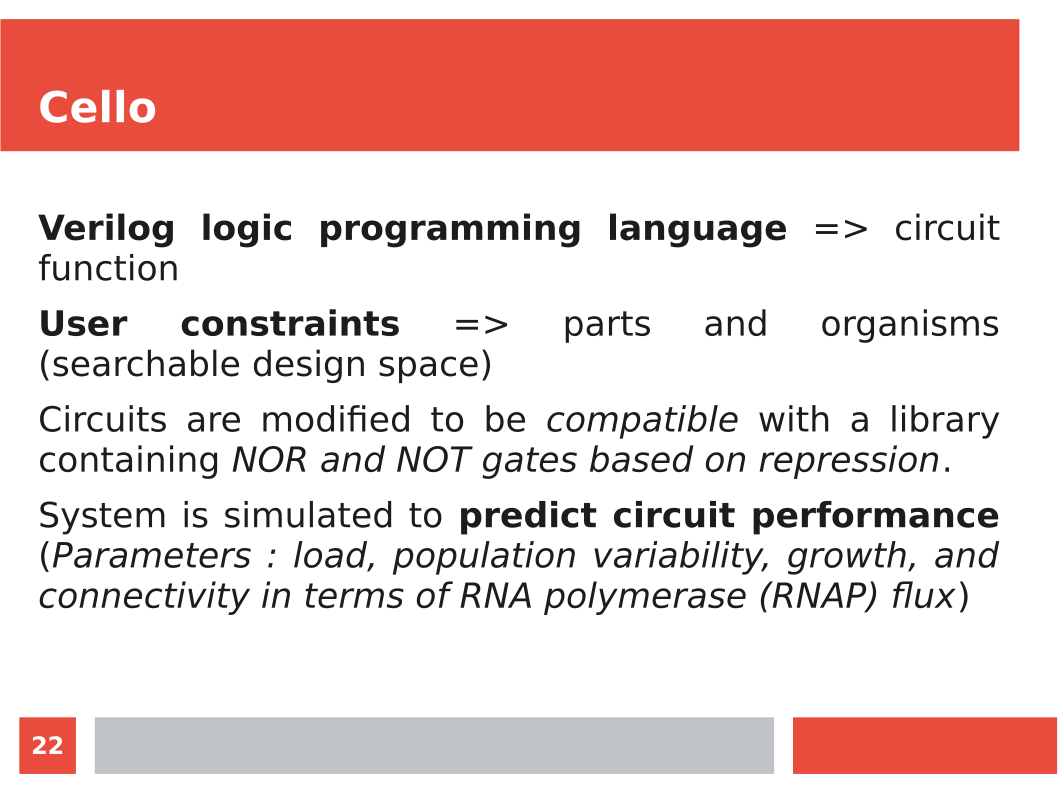
Cello Verilog logic programming language => circuit function User constraints (searchable design space) parts and organisms Circuits are modified to be compatible with a library containing NOR and NOT gates based on repression. System is simulated to predict circuit performance (Parameters : load, population variability, growth, and connectivity in terms of RNA polymerase (RNAP) flux)
GENE CIRCUIT DESIGN AUTOMATION FLOW
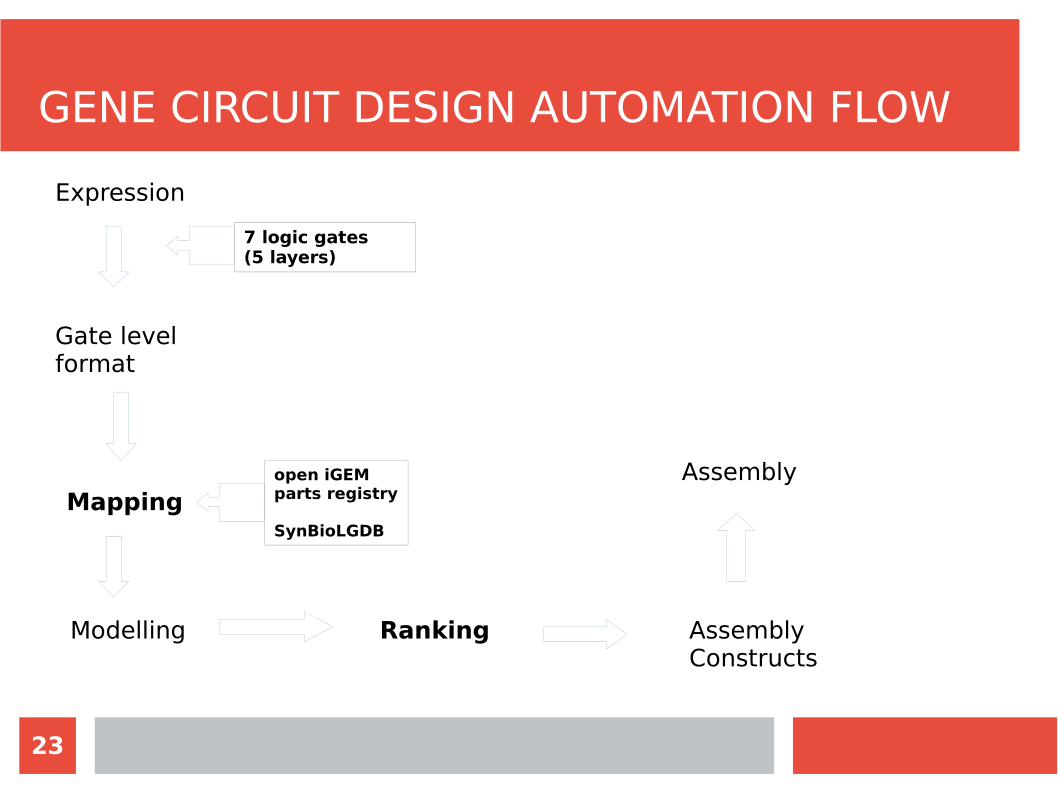
GENE CIRCUIT DESIGN AUTOMATION FLOW Expression 7 logic gates (5 layers) Gate level format Mapping open iGEM parts registry Assembly SynBioLGDB Modelling Ranking Assembly Constructs
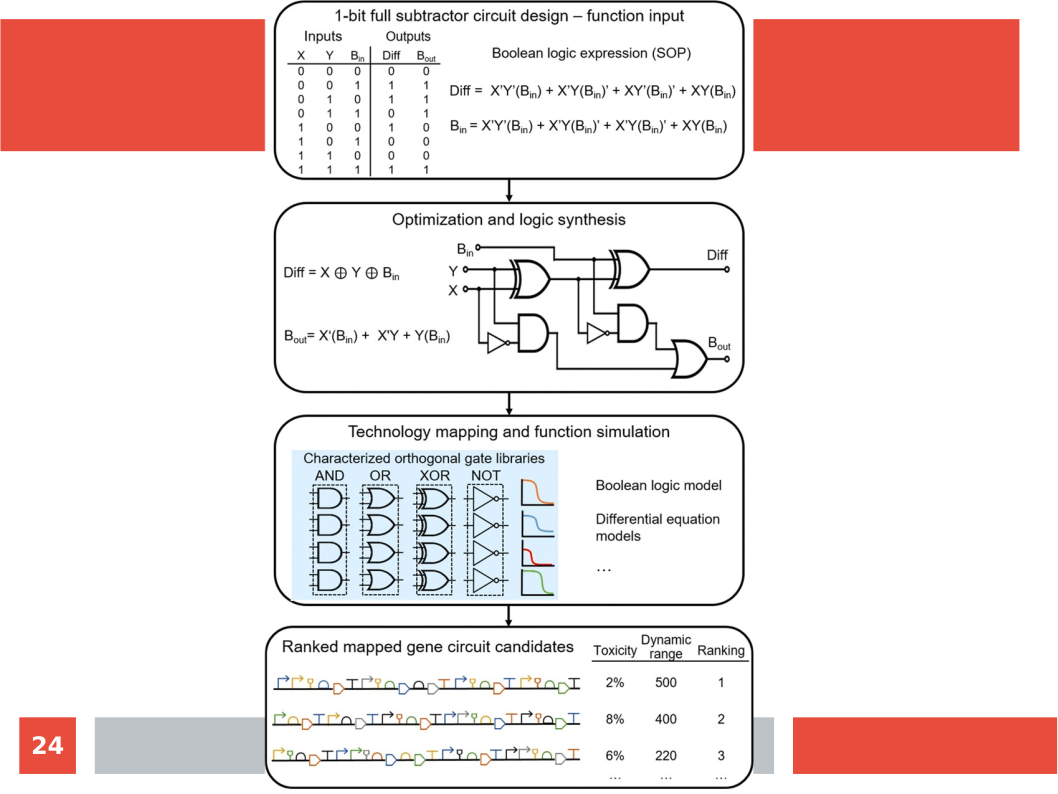
Design flow for a 1-bit full subtractor circuit: function input (truth table, Boolean expressions), optimization and logic synthesis, technology mapping with orthogonal gate libraries and simulation, and ranked gene circuit candidates by toxicity and dynamic range
Challenges in Automated Software Design
Challenges in Automated Software Design Mathematical models that are predictive of circuit function - nonlinear features of the biochemical interactions (given circuit) Mechanistically specific interactions (DNA/Protein) of the cell should be known. of elements Chemical reactions are discrete and stochastic (Scope of the answer!) Still, ODEs, PDEs, SDEs, Sampling/Integration of CME, etc. Methods for inferring parameters for models of specific circuits is just as important.
Advanced paradigms in cellular computing
Advanced paradigms in cellular computing Sequential Logic over Combinatorial Logic State machines can be one of a number of finite states at any given time, with access to states dependent on predetermined sequence of events triggered by various conditions - most complex reported has 16 different positions Distributed Computing – avoids any potential “CrossTalk” Most complex system to date : a 1-bit full binary adder; incorporating 22 separate gates distributed amongst 9 specialized mammalian cell types in a complex three dimensional environment Cell–cell signalling to induce structural self-organisation of tissues and pattern formation
Concluding Remarks
Concluding Remarks Applications : biomanufacturing biosensing Biotherapy Problems to overcome : significant lack of predictability Ginkgo bioworks Zymergen Industrial strain engineering: heavy use of robotics NGS Automation Software modularity and standardization fundamental gaps in knowledge of basic biological processes gap between proof of concept and industrially sized production
Reference
Reference Xiang, Y., Dalchau, N. & Wang, B. Nat Comput (2018) 17: 833. https://doi.org/10.1007/s11047018-9715-9